NUST eLearning
Search results: 245
- Lecturer: Prof Mercy Chitauro
- Lecturer: JOHN KATANGA
- Lecturer: Dr. Leena Kloppers
This course is designed to equip students with essential skills and knowledge in leadership and project management specifically tailored for the procurement domain. It explores the dynamic role of effective leadership and project management practices in achieving successful procurement outcomes.
Students will delve into the principles of leadership, communication, and team building, examining their significance in driving procurement initiatives and fostering collaboration among stakeholders. Emphasis will be placed on understanding different leadership styles and their impact on procurement decision-making processes.
Furthermore, the course delves into project management methodologies, tools, and techniques relevant to the procurement context. Students will learn how to initiate, plan, execute, and control procurement projects to ensure efficient delivery and adherence to objectives, timelines, and budgets.
Throughout the course, case studies and real-world scenarios will be incorporated to provide practical insights and challenges faced in procurement leadership and project management. By the end of the course, students will have the competencies to effectively lead procurement teams, manage complex projects, and drive successful procurement outcomes within their organizations.
- Lecturer: Joshua Mario
- Lecturer: Charles Mbazuvara
- Lecturer: Maria Ndakola
- Lecturer: Martha Polla

This is a Thesis Research Repository
- Lecturer: Christine Aitana
- Lecturer: Simeon Amunkete
- Lecturer: Prof Nikodemus Angula
- Lecturer: Prof Asa Romeo Asa
- Lecturer: Prof Sulaiman Olusegun Atiku, PhD
- Lecturer: Bernadette Cloete
- Lecturer: Prof Martin Dandira
- Lecturer: Prof Smart Dumba
- Lecturer: Dr Kabiru Genty
- Lecturer: Prof. Andrew Jeremiah
- Lecturer: Godwin Kaisara
- Lecturer: Prof Daniel Kamotho
- Lecturer: Prof Stewart Kaupa
- Lecturer: Dr Africa Makasi
- Lecturer: Dr Samuel Mushelenga
- Lecturer: Prof Isaac Randa
- Lecturer: Prof Tafirenyika Sunde
- Lecturer: Dr Merlyn Tjimuku
- Lecturer: Dr Hylton J. Villet

Congratulations on your acceptance into this prestigious program. Your decision to pursue further studies in econometrics reflects your dedication and commitment to mastering this critical field of study. Throughout this course, you will delve deeper into advanced concepts and methodologies that will sharpen your analytical skills and equip you with the tools needed to tackle real-world economic challenges. Whether you aspire to pursue a career in academia, government, or industry, the knowledge and expertise gained here will be a solid foundation for your future endeavors. I am here to support you every step of the way. I encourage you to engage in discussions actively, collaborate with your peers, and seize every opportunity to expand your understanding of econometrics. As you embark on this academic adventure, remember that challenges are opportunities in disguise. Embrace them with enthusiasm and perseverance, and you will emerge stronger and more knowledgeable than ever before. Once again, welcome to the Advanced Applied Econometrics class of 2024. I look forward to witnessing your growth and success over the coming months.
- Lecturer: Dr Princewill Okwoche
This course aims to build students' capacity to manage complex contracts that are high value or risk, develop plans to monitor the suppliers', contractors and consultants’ performance, and take corrective action in accordance with the relevant contractual clauses and overall provisions of the applicable contract law. The course covers the contracting process from contract award through planning and management to contract close-out and resolving disputes.
- Lecturer: Linda Kambonde
- Lecturer: Selma Kambonde
- Lecturer: Faith Marais
- Lecturer: Kleophas Nampadhi
Welcome Advanced Industrial Relations
Industrial relation is a key aspect in every organisation, establishing effective communication between employees and management. The main purpose of this course is to provide you with the necessary skills of maintaining a sound working relationship among all employment relationship stakeholders. Conflict, negotiation and dispute resolutions are some of the topics discussed in this module. The course further looks at labour relations framework, collective bargaining and labour economics amongst others. The module is goal-oriented, allowing you to interact with other students and IR laws, which affect the way businesses operate.
- Lecturer: Brenda Kahuikee
- Lecturer: Abraham Shilomboleni
- Lecturer: Fiina Shimaneni
Information literacy for senior and postgraduate students, as well as staff. Information provided will attempt to cover all aspects of the research cycle.
- Lecturer: Stephen Visagie
- Lecturer: Paulus Andreki
- Lecturer: Trevor Lake
- Lecturer: Rebecca Mujazu
- Lecturer: Cephas Pahla
- Lecturer: Cephas Pahla
- Lecturer: James Ojo
- Lecturer: Brenda Kahuikee
- Lecturer: Abraham Shilomboleni
- Lecturer: Dr Vusumuzi Sibanda

The Advanced Property Finance and Investment course is designed to equip students with the advanced skills needed to evaluate and interpret the performance of landed property as an investment vehicle by researching, analysing, and advising on investment decisions. The course will examine commercial property financing and policies and regulations regarding general property financing and investment in Namibia.
- Lecturer: Verinjaerako Kangotue
- Lecturer: Dr Dibaba Gemechu
- Lecturer: Dr. Richard Maliwatu
|
|
The course is an introduction to animal (mammalian) structure and function. It focuses on how the form and function of animals enables them to meet their need to survive and reproduce. To do this, animals acquire, process and use energy to cope with challenges in the internal and external environments through a wide variety of physiological, morphological, reproductive and behavioural adaptations Outcomes On completion of this course, students should be able to:
|
- Lecturer: Absalom Shitalangaho
This course is a broad introduction to this interdisciplinary field based on processes and colloidal phenomena at interfaces, viz. gas-liquid, gas-solid, liquid-liquid, liquid-solid and solid-solid. Taking a genuinely applied approach, with applications drawn from a wide range of industries, we will attempt to meet your demands of working in the field. The course will, therefore introduces you to a wide range of real industrial examples. These examples range from water treatment through to soil management as well as examples taken from the coatings, detergency, ore flotation and photographic industries. To understand the course better, some of the more demanding mathematical derivations will be treated in a more subtle manner. With carefully structured units, starting with an introduction, and practice questions, this course is invaluable for undergraduates like you taking a first course on colloid and surface chemistry.
- Lecturer: Prof Habauka Kwaambwa


This course covers the basics of modern cryptography as used to secure e-commerce transactions and code distributed over the Internet. The course covers cryptographic primitives used for encryption and authentication; it also explains how these primitives are used to improve the security of applications. Emphasis is placed on what problems cryptography can solve. The overall aim of this course is to explore the various encryption and decryption techniques that can be applied to secure various e-commerce applications. The emphasis is on gaining an understanding of the concepts, the practical usability, and the vulnerabilities of different methods in cryptology.
- Facilitator: Prof Attlee Gamundani

This course introduces students to the practical application of advanced food production in the cold kitchen including butchery.
- Lecturer: Ralf Herrgott
This course aims at enabling students to solve mathematical problems using numerical approaches, specifically considering numerical quadrature, ordinary/partial differential equation examples and numerical optimisation models.
- Lecturer: Prof Sunday A. Reju
- Lecturer: Aili Ashipala
- Lecturer: Jan Swartz
This is an advanced course in Property valuation. It involves application of valuation principles, appropriate techniques and method to carry out valuation of specialized properties. Topics include Agricultural Valuations, Valuation of Plant and machinery, valuation for compulsory purchase/expropriation, valuation for rating and business valuation techniques.
- Lecturer: Sam Mwando

Learning Outcomes
Upon successful completion of the course, the student should be able to:
- Use Artificial Intelligence (AI) techniques to map problem domains into suitable models for effective and efficient processing;
- Evaluate the efficiency and applicability of different AI concepts, models, and algorithms in a specific problem domain;
- Implement AI algorithms.
Course Content
Search Algorithms
- Search, Beyond classical search and Adversarial search
- Constraint Satisfaction and Optimisation
Knowledge, Reasoning and Planning
- Knowledge Representation and Inference
- Classical Planning
- Markov Decision Processes
Machine Learning
- Reinforcement Learning
- Deep Learning
- Lecturer: Naftali Indongo

This course, Auditing 310 (GAU711S) is designed to give you a comprehensive understanding of the audit process, from obtaining evidence to reporting on financial statements. You will learn the auditor's responsibilities, key audit procedures, and how to evaluate audit evidence, both in manual and computerized environments.
The course covers several key areas, including:
- Audit Evidence: You'll understand how auditors collect evidence, the hierarchy of evidence, and how to assess financial statement assertions.
- Test of Controls: You'll explore how auditors test controls across various business cycles like revenue, payments, and payroll, in both manual and automated settings.
- Internal Auditing: You'll dive into the role and responsibilities of internal auditors, as well as the relationship between internal and statutory audits.
- Substantive Procedures & Sampling: Learn how to design and apply substantive audit procedures and how to use sampling techniques to test audit items.
- Audit Reporting: The course will cover how auditors structure reports, including unmodified and modified opinions, and how to handle matters like fraud or going concern issues.
Additionally, the course introduces you to modern developments in the auditing world, such as the use of digital technology and sustainability audits.
Assessments are hands-on, with face-to-face tests to assess your understanding of the material. Overall, this course prepares you for a career in auditing by providing both theoretical knowledge and practical skills needed in the field.
- Lecturer: Patemoshela Erkie
- Lecturer: Linda Kambonde
- Lecturer: Faith Marais
- Lecturer: Ester Sakeus
This course aims to provide the necessary background information on those aspects of biology that are common to both plant and animal studies and to cover those biological kingdoms (including viruses) that are neither plant nor animal.
- Lecturer: Louise Theron

Welcome to the world of Biostatistics. This course will help you understand public health research in terms of research designs, measures of disease risk, statistical modeling with public health data and survival analysis. We introduce to a family of models called GLMs, Generalised Linear Regression models such as logistic and Poisson regression models. Of importance will be the estimation of parameters, making appropriate inferences on these parameters and the explanatory variables. Model diagnostics will be delt with in detail to enable you to assess the goodness of fit of your models before you publish results that are based on these models. Hope you will enjoy the course!!!
- Lecturer: Dr Dibaba Gemechu
- Lecturer: Dr Josua Mwanyekange
- Lecturer: Cephas Pahla
- Lecturer: Dioné Izaks
- Lecturer: Trevor Lake
- Lecturer: Rebecca Mujazu
- Lecturer: Cephas Pahla
The course is designed to enable students to survey townships and prepare General Plans and survey records suitable for approval by the Surveyor General in terms of the Land Survey Act 33 of 1993. It also covers some of the material that are prescribed for candidates sitting the law examination to be registered as professional land surveyors in Namibia. This is also the same legislation that guide those practicing cadastral surveying in their day to day work.
The enrollment key for this course is CAS610S
- Lecturer: Taruwona Makaza
- Lecturer: Chandrasekar Muthukameswaran
- Lecturer: Rian Uusizi

Hi ,
Welcome to the Classroom and Workshop Management in TVET (CWC510S) course! My name is Dr Kristofina Junius, facilitator, along with Ms Brenda Kahuikee, administrative support for this course.
Upon completion of this course, you should be able:
- examine the different definitions of classroom and workshop management.
- analyse various theories of classroom and workshop management.
- discuss trainees' profiles about their personal beliefs and styles of classroom and workshop management.
- investigate different strategies to improve classroom and workshop management.
- implement action plans for effective classroom and workshop management.
You will have the opportunity to work on your own as well as connect with your peers to share knowledge and experiences.
The course starts on Monday, 12 February 2023 and runs through until 17 May 2023.
- Lecturer: Dr Jacqueline Bock
- Lecturer: Juliet Eiseb
- Lecturer: Macdonald Handura
- Lecturer: Beatrice Mutonga
This course aims to teach the Biomedical Sciences student to assess organ system functions, evaluate interrelationships in health and disease conditions, related analytical laboratory procedures and be able to interpret results for identification of disease abnormalities.
- Lecturer: Herbert Tendayi Mapira
This course prepares students for entry into the industry as advanced life support (ALS) paramedics. Through supervised real-life patient management in pre-hospital and hospital environments, students will apply advanced cognitive and psychomotor skills, building a solid foundation of practical experience. The course aims to prepare the student for entry into industry as an advanced life support paramedic through real-life patient management and applying advanced cognitive and psychomotor skills and procedures under the supervision and guidance of registered advanced life support paramedics and clinicians. The course will further enable the student to build an experience database from which to work once employed in industry.
- Lecturer: JC Botha
This course aims to prepare the student for entry into industry through the real life management of patients and application of learnt cognitive and psychomotor skills and procedures under the supervision and guidance of registered practitioners. The course will further enable the student to build an experience database from which to work once employed in industry.
- Lecturer: Oghenekevwe Shalom Akpokiniovo
- Lecturer: Jay-Jay Brown
- Lecturer: Charmaine Conradie

This course aims to prepare the student for entry into industry through the real life management of patients and application of learnt cognitive and psychomotor skills and procedures under the supervision and guidance of registered practitioners. The course will further enable the student to build an experience database from which to work once employed in industry.
- Lecturer: Salome Veldskoen
This course prepares students for entry into the industry as advanced life support (ALS) paramedics. Through supervised real-life patient management in pre-hospital and hospital environments, students will apply advanced cognitive and psychomotor skills, building a solid foundation of practical experience. The course aims to prepare the student for entry into industry as an advanced life support paramedic through real-life patient management and applying advanced cognitive and psychomotor skills and procedures under the supervision and guidance of registered advanced life support paramedics and clinicians. The course will further enable the student to build an experience database from which to work once employed in industry.
- Lecturer: JC Botha
- Lecturer: Prof Andrit Lourens

The purpose of the course is to provide students with a general introduction to the Namibian legal system, with its main focus the law of contract. The course starts with general introduction to the concept of law and an overview of the Namibian court structure and contemporary sources and branches of Namibian law, and also introduces students to the Constitution and the impact that it continues to have on legal development. The course then provides students with a general but comprehensive introduction to the general principles of contract, focusing on formation of contracts, the content of contracts, breach of contract and remedies for breach.
- Lecturer: Kirby Claasen
- Lecturer: Mariette Hanekom
- Lecturer: Eddy Maiba
- Lecturer: Beatrice Mutonga
- Lecturer: Wilhelmina Shakela
- Lecturer: Emmy Wabomba

This course aims to equip the students with the necessary knowledge and skills to provide care in the community clinic environment at an advanced life support level.
- Lecturer: Carolie Cloete
- Lecturer: Samuel Dipura
This course forms part of the fourth-year curriculum for the Programme of Human Nutrition. This course is based on both theory and practical and aims to provide students with knowledge and skills on how to utilise computer software to solve problems and manage nutritional programmes.

This course forms part of the fourth-year curriculum for the Programme of Human Nutrition. This course is based on both theory and practical and aims to provide students with knowledge and skills on how to utilise computer software to solve problems and manage nutritional programmes.
- Lecturer: Fiina Namukwambi
- Lecturer: Timea Nghwada
- Lecturer: Dr George Waliomuzibu
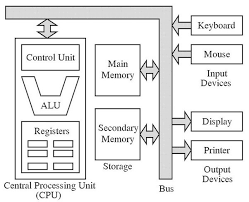
Computer Architecture and Organization aims to develop a deeper understanding of the hardware environment upon which all of computing is based, and how a hardware layer is interfaced to the software layers that comprise the applications that perform modern computing. Students need to understand computer architecture to develop programmes that can achieve high performance through a programmer’s awareness of hardware functional components, their characteristics and limitations. In selecting a system to use, students should be able to understand the trade-offs among various components, such as CPU clock speed, cycles per instruction, memory size, and average memory access time
- Lecturer: ANDREAS AMUKWA
- Lecturer: Andreas Amukwa
- Lecturer: Sepiso Chikuruwo
- Lecturer: Cassius Guiob
- Lecturer: Cassius Harold
- Lecturer: Petrina Ihuhwa
- Lecturer: ASTERIA JEREMIA
- Lecturer: Daniel Leonardu
- Lecturer: JOHANNES NATANGWE
- Lecturer: Phius Petrus
- Lecturer: Julius Wariael Silaa
- Lecturer: NADIPITE TANGENI

This course is designed to provide knowledge and skills necessary to computerise manual accounting procedures. Proper record-keeping using any accounting package is essential and enables one to produce financial statements of an organisation.
- Lecturer: Henrietha Beukes
- Lecturer: Toivo Elago
- Lecturer: Linda Kambonde
- Lecturer: Helmut Namwandi
- Lecturer: Annete Peter
By the end of this course of study, students should be able to:
- Describe a computer and identify its basic structure.
- Use a computer effectively to source for information and to solve problems.
- Use and apply computer application packages for word-processing, spreadsheets, presentation and presentation graphics,
- Use mathematical/numerical data processing packages to assist in carrying out engineering tasks (e.g. Mathcad, Mat lab etc.)
- Use common software applications as tools in solving engineering problems.
- Use computer applications as tools to assist in carrying out engineering tasks.
- Use mathematical packages to solve engineering problems (e.g. Microsoft Excel, MathCAD)
- Apply engineering problem-solving techniques to analyze and develop basic algorithms
- Lecturer: Aili Ashipala
This course aims to provide students with knowledge of framed structures.
We shall cover the following types of framed buildings:
- Timber Frames
- Steel Frames
- Concrete Frames
- Lecturer: Deharno Kloppers

This course aims at providing the students with the understanding of elements and technologies used by carrier networks (ISP) to provide services such as telephony, Internet and television to individuals. The course also addresses the problem of external routing and the implementation of quality of service by resource reservation or by traffic engineering in the networks.
- Lecturer: Helena Hainana

The course is designed to provide students with advanced knowledge and approaches to manage correctional facilities successfully. Special emphasis is directed toward applying concepts to the management of multi-focused institutions that provide for security and rehabilitation programmes. The course further enables students to manage the overall correctional operations, including the facility setting, offenders, and staff. Additionally, students will be able to discuss and examine emerging contemporary issues, such as developing correctional staff as human service professionals, community alternatives to incarceration, privatisation, and other emerging issues.
- Lecturer: Prof Hennie Bruyns
- Lecturer: Macdonald Handura
- Lecturer: Beatrice Mutonga
- Lecturer: Gail Van Wyk

The course is designed to enable you to effectively manage the full scope of any project to be initiated in the correctional services environment. Emphasis is on developing the student’s proactive planning, organisational, and communication capabilities throughout all project development and implementation stages. The course provides strategies for both managing tasks (i.e., establishing timetables, identifying resources, monitoring progress, implementation and evaluation) and leading people (i.e., establishing accountability, sustaining momentum, communicating effectively). Concepts are integrated through a final project in which students develop a comprehensive plan to implement a correctional initiative that embraces all significant project management principles addressed in this course.
- Lecturer: Prof Hennie Bruyns
- Lecturer: Macdonald Handura
- Lecturer: Beatrice Mutonga
CONTACT HOURS:
As per the programme timetable uploaded on the NUST website
NQF LEVEL AND CREDIT:
Level 6 with 24 credits
COURSE DESCRIPTION:
The course also aims at affording students time to explore different areas of personal development, apply personal development and creative thinking skills that are critical for the working environment and in their personal lives.
PRE-REQUISITES:
New Venture Development in Practice
COURSE EQUIVALENCIES:
None
COURSE DELIVERY METHODS:
The course will be facilitated using a hybrid or blended learning approach incorporating the use of digital technologies such as MyNUST eLearning platform and Microsoft Teams. The course will be facilitated through the following learning activities:
· Lectures in which students are expected to take notes
· Reading assignments
· Participation in class/group discussions
· Individual or group class presentations
· Tutorials
· Take-home assignments and tests
The following communication tools could be used in this course:
My NUST e-learning platform, Email, MS TEAMS Discussion Board, Scheduled Chats, Unscheduled chats, Teleconference calls, Online content, WhatsApp groups, etc.
Course Format:
240 hours
Contact hours: 60 hours, Directed self-learning: 60 hours, Self-Directed Learning: 100, Assessment: 20 hours
EFFECTIVE DATE:
15th February 2024
- Lecturer: Selma Iipinge
- Lecturer: Dr Venaune Hepute

To equip the students with all necessary theoretical background information and knowledge to be able to prepare good quality cold kitchen items in a professional and commercial environment. This course introduces students to the theoretical constituent elements of advanced food production in the cold kitchen including butchery.
- Lecturer: Ralf Herrgott
Data management, ethics and security (DME911S) forms part of the Master of Data Science programme. The course is offered in the first semester. The module can be divided into three parts: data management, ethics and security. The course aims to expose students to advanced concepts in handling large and varied datasets including the design, storage, access, protection, governance, and security.
- Lecturer: Dr. Richard Maliwatu

This course aims to provide students with an understanding of the underlying principles as well as the design, implementation and operation of both fixed and wireless networks. The course will also expose students to practical network environments through the configuration and troubleshooting of network topologies using network simulation tools.
- Lecturer: Taleni Andjamba
- Lecturer: Helena Hainana
- Lecturer: Jovita, Nyanyukweni Mateus
- Lecturer: JOSEF RUFUMA
- Lecturer: Josef Rufuma
- Lecturer: Albertina Shilongo
- Lecturer: LINEEKELA SHISHIVENI
- Lecturer: Lineekela Shishiveni
This course is designed to expose the student to advanced data structures and algorithms used to solve complex and computationally intensive problems.
- Lecturer: Prof Ambrose Azeta
- Lecturer: Riahama Musutua
- Lecturer: Steven Tjiraso
The aim of the course is to impart knowledge and skills to enable students to manage a DBMS in order to optimise its use, administer users, create an operational database and properly manage the various structures in an effective and efficient manner including performance monitoring, secure databases as well as plan and implement recovery strategies. The course provides a hands-on administrative approach using current relational DBMSs.
- Lecturer: Ericky Iipumbu
- Lecturer: Ronald Karon
- Lecturer: Albertina Shilongo

- Lecturer: Charles Mbazuvara
- Lecturer: Esther Olivier
COURSE DESCRIPTION:
This course aims to equip students with Design Thinking concepts and tools for synthesising human-centred techniques to solve problems in a more creative and innovative approach. The course concentrates on evaluating alternative methods to solve problems that might not be instantly evident. Students will be able to integrate the iterative design thinking process of empathising with users of the product or service, defining ideas, producing a prototype and testing.
- Lecturer: Selma Auala
- Lecturer: Joel Chipoya
- Lecturer: Imasiku Imasiku
- Lecturer: Rosetha Kays
- Lecturer: Joseph Muhepa
- Lecturer: Dr Gabriel Nhinda
This course is intended to provide students with critical and new premises of knowledge on holistic, multi-disciplinary, multi-dimensional debate regarding development theory, philosophy, method, strategy, and management and policy issues. It will also expose students to the integrated approach, developmental characteristics, challenges and opportunities. This course is further intended to provide students with enhanced knowledge on the meaning, significance, forms, organisation and limitations of community development in Africa as well as gender and development.
- Lecturer: Brenda Kahuikee
- Lecturer: Abraham Shilomboleni
- Lecturer: Pia Mbemurukira Teek

Disaster and Mass Incident Management is aimed at introducing the concept of mass incidents within the Namibia setting in order to improve emergency management and preparedness.
- Lecturer: Dillon Fredericks
Econometrics is a major part of degree programmes in economics. Indeed, economists, especially those in the areas of macroeconomic modelling and research, amongst others, need reasonable knowledge of this course in order for them to operate in a more efficient manner. Given this background, this course essentially aims at equipping the students with the basics of Econometrics as well as some aspects of Applied Econometrics. The students should be able to build econometric models, estimate econometric models, evaluate econometric models and also forecast macroeconomic variables.
- Lecturer: Henrietha Beukes
- Lecturer: Linda Kambonde
- Lecturer: Eden Shipanga

Dear students
Welcome to Educational Technology
This course aims to provide students with an understanding of the various ways of using online technologies and resources to support teaching, learning, and assessment in campus-based and online course contexts.
- Lecturer: Macdonald Handura
- Lecturer: Beatrice Mutonga
The course, Electrical Machines 214, introduces students to the fundamentals of electrical machines, i.e., the construction, operation and applications of electrical machines.
The course aims at equipping the students with the necessary skills required to carry out the basic analysis of electrical machines and electrical machine systems. The course also provides the necessary theory of electro-mechanical energy conversion principles required to understand the construction, operation and control of electrical machines and machine systems.
- Lecturer: Kalaluka Kanyimba
- Lecturer: Dr Anunciya Joshua

This course forms the core of the Programme of Emergency Medical Care together with Clinical Practice. The course is divided into theory and practicum components. The practicum comprises Simulated Patient Assessment and Management & Simulated Clinical Skills and Objective Structured Clinical Evaluation (OSCE). This course will provide you with the necessary learning resources to acquire the knowledge, practical skills, and critical thinking relating to the pre-hospital emergency medical care of patients. At this level, you are introduced to most medical and trauma concepts laying the foundations for further learning in the coming years of study.
- Lecturer: Charmaine Conradie

This course forms the core of the Programme of Emergency Medical Care together with Clinical Practice. The course is divided into theory and practicum components. The practicum comprises Simulated Patient Assessment and Management & Simulated Clinical Skills and Objective Structured Clinical Evaluation (OSCE). This course will provide you with the necessary learning resources to acquire the knowledge, practical skills, and critical thinking relating to the pre-hospital emergency medical care of patients. At this level, you are introduced to special population patients and more invasive medical and trauma concepts laying the foundations for further learning in the coming years of study.
- Lecturer: Salome Veldskoen
This programme has been designed for Work Integrated Learning eligible students to enhance their soft skills and offered through the Cooperative Education Unit.
- Lecturer: Jordaania Kondjeni Andima
- Lecturer: Petrina Batholmeus
- Lecturer: Patemoshela Erkie
- Lecturer: Elaine January-Enkali
- Lecturer: Brenda Kahuikee
- Lecturer: Roxanne Murangi
- Lecturer: Ndapewa Nangombe
- Lecturer: Mwetuvaya Nghiiki
- Lecturer: Amanda Schroeder
- Lecturer: Viktoria Shakela
This course aims to set a foundation for the entire MSES programme by providing conceptual and practical knowledge on both renewable and non-renewable energy systems for exploitation through appropriate technologies. Starting from a discussion of the importance of energy and the fundamentals of energy sources (renewable and non-renewable), the course explores different types of energy systems, with emphasis on renewable energy in the electricity supply industry, culminating in concepts of demand-side management and energy efficiency.
LEARNING OUTCOMES:
Upon successful completion of the course, students will, through assessment activities, show evidence of their ability to:
· Describe relationships between Energy Systems and the Sustainable Development Goals
· Discuss the fundamental features of energy sources (both renewable and non-renewable) and their associated environmental impacts.
· Describe the Namibian electrical power system and the role of renewable energy technologies in resolving the World Energy Council’s energy trilemma.
· Assessment techniques for renewable energy resources.
· Explain the concepts of power system demand-side management and energy efficiency
- Perform design calculations for selected renewable energy systems.
- Lecturer: Prof James Katende
- Lecturer: Sophia Van Greunen

ENGINEERING CHEMISTRY 124(ACH521S) is a core course to be completed in the second semester. The overall aim of this course is to equip students with an understanding of fundamental principles of physical, organic, and inorganic chemistry. This will enable students to develop an ability to observe, analyze and interpret information objectively and to make rational decisions when solving chemistry-related problems.
- Lecturer: Adeltraud Mughongora
Welcome to Engineering Physics. In this course, you are expected to master the fundamental principles of physics to equip you with quantitative problem solving skills to a range of physical and practical problems.
- Lecturer: Daniel Nghidengwavali Lufuma
This course aims at equipping MEAL candidates with high-level knowledge and skills that enable them to develop, implement, and evaluate market-driven ESP programmes in the 21st century Namibian workplace.
- Lecturer: Dr Saara Shipale
- Lecturer: Prof Haileleul Zeleke Woldemariam
Morphology is one of the major branches of linguistics. It is concerned with the internal structure of words and word formation processes in English. In this course, you will understand the structure of words and how the words we used are formed. Through the knowledge of word structure, you are better able to understand and identify the parts of speech and how they can be used to form sentences when you study syntax in your second year.
- Lecturer: Johnson Mutirua
- Lecturer: Beatrice Mutonga
- Lecturer: Anneli Nghikembua
Welcome to Environmental Engineering!
This course takes us to the environment!
...as we search to balance the economic, social and environmental aspects of our current society's needs without compromising the ability of future generations to meet their needs.... Brundtland, 1987
- Lecturer: Liina Mutilifa
This course provides a basic introduction to the natural environment and its relationship with spatial planning and development.
- Lecturer: Pieter Genis
Upon completing this course students will, through assessment activities, show evidence of their ability to:
● Discuss the principles and safety measures for water;
● Outline the processes for water sampling, examination and quality;
● Identify the anthropogenic sources and control of air, water and soil pollution;
● Assess the legal requirements with respect to air, water and air pollution;
● Describe Environmental Management Systems (Environmental Auditing and Environmental Impact Assessments).
- Lecturer: Bernolda Benjamin
This course is offered in the first semester of the 4th year of study to Environmental Health Sciences students towards their Professional degree in Environmental Health Sciences. The course is presented in five (5) units, each with its own learning outcomes. The mode of presentation is through a combination of both theoretical and applied practical modes.
- Lecturer: Joshua Hidinwa
This course is designed to enable the student to use epidemiological (health research) methods for problem solving in public health.
- Lecturer: Dr Larai Aku Akai
The overall aim of the course is to give the students the necessary skills to assess cooperate networks for vulnerabilities and mitigate them before security attacks. The students will secure a medium-sized company network against possible attacks and intrusions, test and configure network security, ensure network devices can operate securely. Further, this course will enable students to report on network security issues and trends, as well as protect networks.
- Lecturer: Prof Mercy Chitauro

- Lecturer: Macdonald Handura
- Lecturer: Dr Kennedy Mabuku
- Lecturer: Beatrice Mutonga
This course is designed to: equip students with the knowledge in the evaluation of public health programs with respect to healthcare data management; enable students to determine the effectiveness of existing programs and to critically analyse the public health initiatives, as well as to develop an evaluation plan for community-based public health initiatives.
- Lecturer: Christian John

This course is structured to introduce the student to various specialized topics in the accounting process including the measurement and recognition in the financial statements of sole traders. Specific emphasis will be placed on the requirements of the International Financial Reporting Standards in the preparation and presentation of financial statements at an introductory level.
- Lecturer: Linda Kambonde
- Lecturer: Hendrina Kangala
- Lecturer: Faith Marais
- Lecturer: Ester Sakeus

Cost and Management Accounting:
The aim of the module is to develop knowledge and understanding of cost and management accounting techniques needed to support management in planning, controlling and monitoring performance in a variety of business context.
The main areas to be covered will include the following:
1. Explain the nature, source and purpose of management information.
2. Explain and analyse data analysis and statistical techniques.
3. Explain and apply cost accounting techniques.
Finance:
Financial Management is concerned with the acquisition and deployment of financial resources to achieve key objectives. The three main areas of financial management are:
1. Acquisition of financial resources
2. Deployment of financial resources
3. The dividend decision
Whether or not to return surplus cash to shareholders (the dividend decision).
- Lecturer: Monica Kaisi-Festus
- Lecturer: lmmanuel-King Kerii Kenaruzo

This course is divided into two separate sections i.e., Finance and Costing. The purpose of this course is to provide students with the competence, on an intermediate level, to understand and apply the underlying concepts of cost accounting, specifically in relation to:
1. The manufacturing environment
2. Detailed knowledge regarding the concepts of inventory control, planning and inventory management
3. Budgeting, standard costing, performance measurement, transfer pricing and business strategy.
The course will equip the students with the skill to evaluate and select long-term investment options and to make decisions regarding the finance of an enterprise and its long-term assets. They would also be provided with the skills to value business operations using different valuation methods and perform financial analysis for decision making.
- Lecturer: Linda Kambonde
- Lecturer: Selma Kambonde
- Lecturer: Faith Marais
- Lecturer: Lameck Odada

Your intention is to become a supervisor, restaurant or hotel manager or one day you want to open your own business in the hospitality industry? Therefore you need to know how a professional team of chefs prepares fancy, trendy, healthy and tasty dishes that are prepared under hygienic conditions, are in line with the establishment’s costings and budgets and ultimately ensure that customers return on a regular basis. This course will give you a detailed insight in food production and how to successfully manage such a department. It is not specifically meant only for the chefs working in the kitchen but also for the people that manage or supervise the Food & Beverage department of a hospitality establishment and gives them a deep understanding on the factors that determine the ultimate success of such operations. This course, as many others in this program give a detailed insight into the different departments of a hospitality establishment such as hotel, lodge, restaurant or bar so that one can get the skills and knowledge to understand how they work, but also how they are connected to each other and which factors do influence a successful operation. Someone that is in charge of a hotel does need to know a little bit from everything and it is therefore essential that he has also worked and trained in the kitchen, as it is one of the most important departments where good money can be made or ultimately where the biggest losses can be accrued. The kitchen is a very sensitive part of the entire hospitality operation and one need to understand it well in order to be able to manage and make a success out of it as it has tremendous impacts on the overall performance of an establishment.
- Lecturer: Dagmar Gruner

This course is about the fundamentals of food production in a commercial environment. It will expose you to important aspects that you need to know to successfully run a catering outlet in a hospitality establishment. However it should be stressed that this course only covers the theoretical aspects and need to be taught concurrently with the course Food Production Practical FPP 510 S which solely takes place in the kitchen. Without doing the practical course at the same time, which will apply all the knowledge and skills learned in this course a full comprehension of the course will not be reached. You would agree that you cannot cook “with a book and a pen” as you need to go into a kitchen and really do it. So what will you learn and take away from this course? Some might argue, I want to become a waiter and or restaurant supervisor and therefore do not need to learn the basics in cooking. Even as a person working in the restaurant, the bar or the front office need the know how the food is prepared or how a profit can be achieved and by the way even if you would decide to venture into a different career the skills you will learn here can help you even if you just apply them at home. It is something you will keep for life, something you can always use in one or the other way.
- Lecturer: Dagmar Gruner

This course forms part of the second-year curriculum for the Programme of Human Nutrition. It is theory based and aims to equip students with knowledge to understand concepts of food and nutrition security locally and globally, in order to mitigate problems associated with food insecurity and malnutrition
- Lecturer: Fiina Namukwambi
- Lecturer: GEORGE WALIOMUZIBU MUKISA
This course introduces students to the constituent elements and fundamentals of customer service. This course will provide students with guidelines and best practices for providing excellent customer service that will enable frontline associates and service staff in back-up and support roles to build, maintain, and increase a loyal customer base. The student is equipped with the ability to address challenges confronting customer service.
- Lecturer: Melizande Kauraisa
- Lecturer: Kutemba Tshitukenina
- Lecturer: Aili Ashipala
- Lecturer: Anna-Liisa Shoopala
- Lecturer: Thebuho Matali
This course aims to introduce students to entrepreneurship as a concept to be able to establish an entrepreneurialmindset by exploring opportunities and new venture creation as well as industry and competitor analysis. Students will then develop greater self-awareness of their fit with entrepreneurial environments and learn the processes of opportunity identification, resource analyses, financial and feasibility analysis.
This course further aims to motivate students to innovate in business. Students will acquire the knowledge and skills needed to manage the development of innovations, recognize, and evaluate potential opportunities and thereby monetize the innovations. Students will be able to exploit the opportunities, and to acquire resources necessary to
implement their plans.
- Lecturer: Brenda Kahuikee
- Lecturer: Johnson Mutirua
- Lecturer: Salmie Sakarias
This course aims to introduce students to the fundamentals of marketing and the environments in which marketing operates and what marketing is to its relevance to the overall business process. It explains the contribution and essence of each of the four traditional and three extra elements (4+ 3 Ps) of marketing products/services and other critical concepts like segmentation and market research and intelligence in developing an effective marketing programme in response to the ever-changing customer and consumers’ demands, needs and wants in other to meet the goal of professional organisations in the areas of sports, logistics, recreation, and transport.
- Lecturer: Dr Kwabena Abrokwah-Larbi
- Lecturer: Elizabeth Elago
- Lecturer: Selma Gwangapi Naanda
- Lecturer: John-Graftt Ndungaua
- Lecturer: T’Neil Young

Geometallurgy 214 (GMT611S) is a core course to be completed in the first semester of the second year of study. The aim of the course is to equip students with basic knowledge and skills to develop and optimise flowsheet development to improve mineral recovery.
- Lecturer: Adeltraud Mughongora
The course is designed to enable students to use modelling and Python programming to build GIS tools that automate the solving of geographical problems from a coding perspective.
- Lecturer: Prof Oluibukun Ajayi
The course provide information on the pathophysiological processes and diagnostic tests for the identification of haemostasis abnormalities.
The aim is also to provide the student with the knowledge to evaluate quality assurance applications in haematology.
The aim is also to provide the student with the knowledge to identify blood parasites with haematological stains.
- Lecturer: Edwig Shingenge
- Lecturer: Roselin Tsauses
Health Management 3, is a course designed to develop/equip the students with the necessary skills of being a potential healthcare manager who will work as part of a professional in a multi-disciplinary team. The course will teach the student to make informed and calculated decisions in the department. By doing so he/she will be able to apply specialised knowledge and technical skills for optimal decision-making in terms of management, in any health systems.
- Lecturer: Immanuel Zeriapi
This course deals with the principal concepts and methods of heat transfer. The objectives of this subject are to develop the fundamental principles and laws of heat transfer and to explore the implications of these principles for system behavior; to formulate the models necessary to study, analyze and design heat transfer systems through the application of these principles; to develop the problem-solving skills essential to good engineering practice of heat transfer in real-world applications.
- Lecturer: Dr Veikko Shalimba
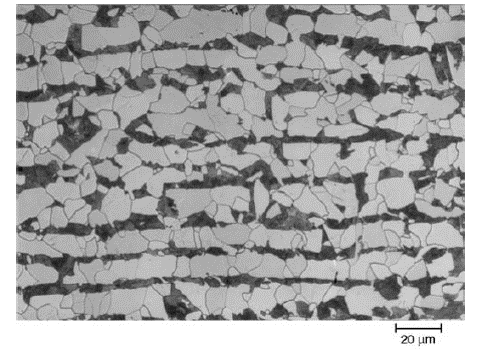
Heat Treatment of Metals 414 (HTM810S) is a core course. It will equip students with competencies to design appropriate heat treatment conditions for steels and alloys and justify the link between thermal processing, phase transformation, and properties of the material
- Lecturer: Jacqueline Kurasha

The course aims to equip students with the necessary skills to comprehend the principles of tissue fixation, the production of paraffin sections and subsequent staining underpinning the successful interpretation of human microanatomy.
- Lecturer: Roselin Tsauses
Welcome to the course History of Technical and Vocational Education and Training (HTV510S).
This course is a mandatory course for all students who study the Diploma in TVET. TVET is education and training which provides knowledge and skills for employment. Much emphasis has been placed on the fact that TVET is a crucial vehicle for social equity, inclusion and sustainable development. A TVET environment has a certain characteristic that distinguishes it from other education environments as it very much skills orientated and is aimed at competencies that are needed by industries. Therefore, students need to understand the TVET environment and the philosophies that underpin it. The following key areas will be addressed in this course:
- The overall goal and desired outcomes of TVET.
- A short history of the development of TVET.
- Comparisons between different TVET systems nationally and internationally.
- The principles of Competency-Based Education and Training.
- Lecturer: Bernadette Cloete
- Lecturer: Dr Indepentia De Waldt
- Lecturer: Linda Kambonde
- Lecturer: Dr. Leena Kloppers
- Lecturer: Faith Marais
- Lecturer: David Mateu
- Lecturer: Gerald Cloete
- Lecturer: Theophilus Naobeb
Human Resource Management comprises a range of functions and functional activities that are carried out in order to, among other things, provide, utilise, remunerate, train, develop and maintain a motivated work force. It can, therefore, be described as a process embracing the dimensions of inception (getting individuals into the public sector); development (preparing employees to work effectively and efficiently); motivation (stimulating employees by caring for their needs) and maintenance (keeping employees in the public sector by providing suitable working conditions).
As you would imagine, the focus will mainly be on the African Public Service. You should thus strive to develop a genuine interest in the activities carried out by public sector institutions. This would provide you with an opportunity to evaluate human resource issues on a regular basis in this sector. You are, therefore, urged to apply practical examples in your approach to this subject.
- Lecturer: Brenda Kahuikee
- Lecturer: Ben Bainiso Namabanda
- Lecturer: Abraham Shilomboleni
- Lecturer: Dr Wassihun Amedie
Industrial Ergonomics (IEM710S) is a core course undertaken in Year 3, semester 5 by Industrial Engineering students and offered in the Mechanical & Marine Engineering Department. The course is design to help students understand human interaction with other elements of a system in order to improve human well-being and overall system performance. The course is design to deal more with the physical aspect of ergonomics without ignoring other units of human factor ergonomics.
- Lecturer: Sipiwe Nyadongo
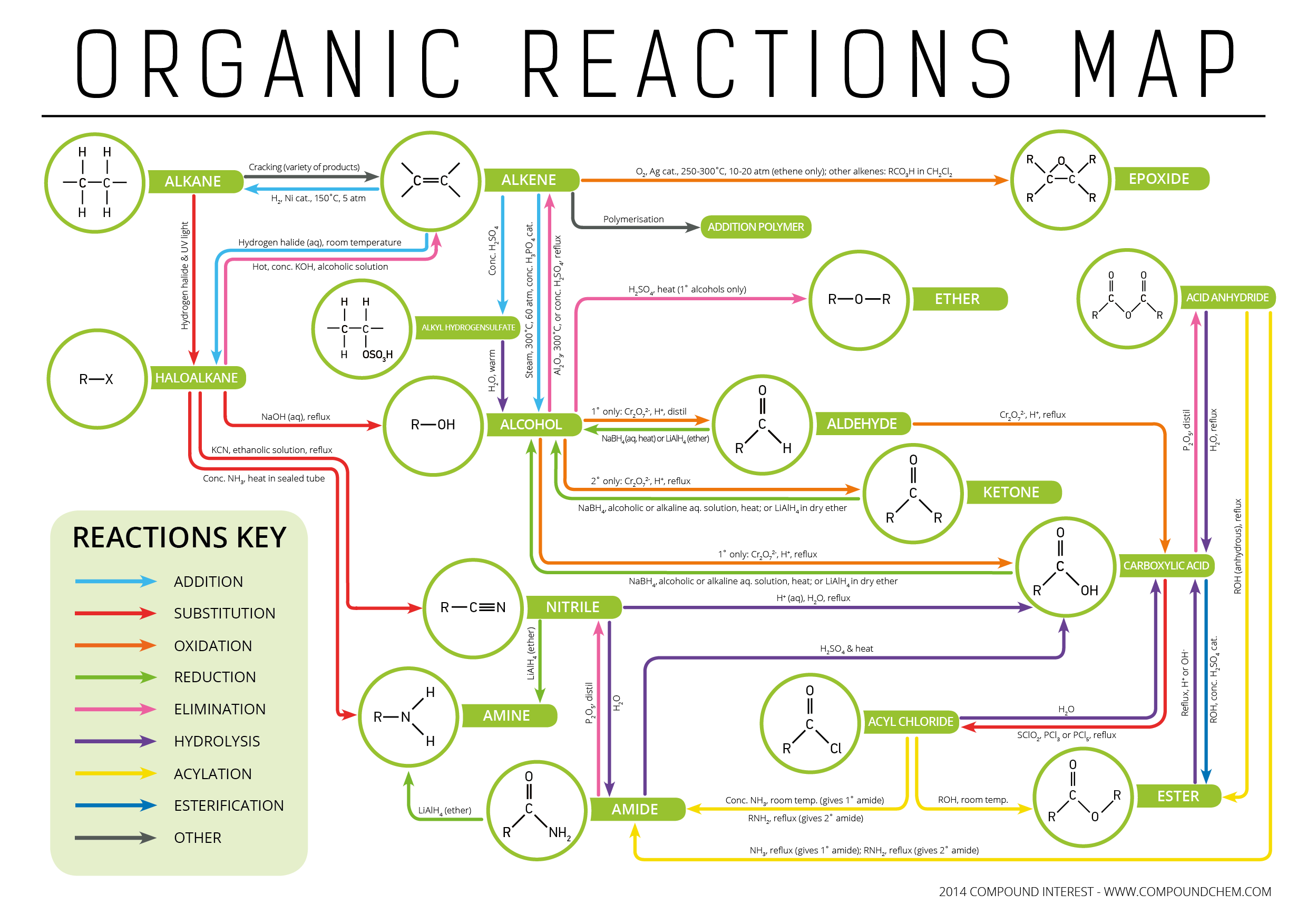
This course aims to enable students to demonstrate a deepened understanding of the application of organic chemistry in the industry. Organic compounds of industrial and commercial importance will be discussed, including their production and environmental impact, use, and the scaling of organic reactions.
Upon completing this course students will, through assessment activities, show evidence of their ability to:
1. Elucidate the mechanisms of major industrial organic reactions;
2. Formulate reaction conditions for the industrial synthesis and transformation of organic compounds, intermediates and fine chemicals;
3. Evaluate the chemistry, use, environmental and economic impact of the basic building block chemicals derived from natural gas, petroleum and non-petroleum sources
4. Evaluate the chemistry, use, environmental and economic impact of polymers derived from ethylene, propylene, butadiene, isobutene
5. Describe the use of catalysts in industrial organic chemistry
6. Discuss concepts of green chemistry and sustainability in the chemical industry
7. Retrieve relevant information in scientific literature and demonstrate effective report writing, experimental design and data analysis.
- Lecturer: Dr Marius Mutorwa
- Lecturer: Stephen Visagie
This is an individual assessment. Upload your work on the link provided. Make sure that your file is a pdf file when you upload
- Lecturer: Admire Kachepa
- Lecturer: Brenda Kahuikee
- Lecturer: Ester Kuuvilwa
This course provides instruction and practice in writing for the mass communication media with an emphasis on the development of the journalistic style. Students will learn the fundamentals of generating ideas for news writing, research, writing style and grammar, and the basics of on-line journalism and research. Through a variety of writing tasks, the course will equip students with language and writing skills, which will enable them to function effectively in the communication environment.
- Lecturer: Jordaania Kondjeni Andima
- Lecturer: Dr Hugh Ellis-Mwiya
- Lecturer: Johnson Mutirua
The course aims at equipping the students with in-depth knowledge about the instrument for operation, characterisation and analysis and their applications in everyday life. This course further help the student in current -day technology, industry, and research
By the end of this course of study, you should be able to.
- Evaluate the importance of different instrument and their use;
- Demonstrate the practical application of the instrument and problems related to the instrument;
- Apply the theoretical principles to solve the operational problem of the instrument;
- Discuss comprehensively use of the instrument for everyday life and scientific purposes;
- Analyse the principle of different instrument, its operation and evaluate the working output;
Develop and maintain useful engineering skills while still retaining an active grasp of the relevant physics
- Lecturer: Prof Dipti Ranjan Sahu
Integrated Clinical Pathophysiology (ICP) is a course which aims to integrate the theory and practicals of the first five semesters of the programme with the laboratory practice learning/ Work Integrated Learning (WIL) of semesters six and seven and to evaluate the laboratory findings in terms of the pathophysiology disease status of the patient. The course involves within subject/ discipline integration which is critical and a precursor to between subject/ discipline integration and ultimately total integration of the knowledge acquired in all semesters of the course. Integration is important because it allows one to process any information presented and appreciate it holistically without apportioning that this is a microbiology issue, chemistry or haematology issue. This comes with the understanding that no disease pronounces itself as discipline specific in a patient, hence we need to use all critical thinking skills acquired in all disciplines to apply our knowledge in the laboratory. It is a very good feeling to like a particular discipline in Medical Laboratory Sciences and even specialise in it, but it is a lot better to understand and apply knowledge across the field of clinical pathology first before specialising.
- Lecturer: Dr Martin Gonzo
- Lecturer: Edwig Shingenge
- Lecturer: Hubert Shitaleni
- Lecturer: Roselin Tsauses

This course introduces students to the fundamental concepts of Intelligent Transportation Systems (ITS) with emphasis on transportation systems, communication systems, vehicle technologies, transportation planning, transportation policy, and urban planning. The course focuses on the application of IT’s to transportation infrastructure and vehicles, and how it enhances transportation safety, productivity, environment, and travel reliability. With the accessibility of mobile devices, ITS applications, such as trip planners, help travellers make informed travel choices.
- Lecturer: Bonny Chicken
- Lecturer: Maria Indongo
- Lecturer: Selma Gwangapi Naanda
- Lecturer: Martha Polla

The aim of the course is to equip students with the skills and knowledge required to work in a hospitality establishment's food preparation areas. Students should be able to develop advanced practical and reflective competence for the department of Food and beverage and Food production
- Lecturer: Alida Siebert
Introduction to Criminal Justice Studies is a foundational course in your studies of Criminal Justice and should assist you as a first-year student to conceptualise and contextualise the various components of the Criminal Justice System. The literature used in the course is mostly imported, while the course will be delivered with an emphasis on the Namibian Criminal Justice system. It provides an examination of the Namibian system of Criminal Justice, its agencies, and the processes that constitute it. The course content therefore focuses on the various functions of its sub-systems, i.e., Police, Prosecution, Judiciary, and Corrections, against the backdrop of the various approaches to explaining "crime.”
- Lecturer: Macdonald Handura
- Lecturer: Beatrice Mutonga
- Lecturer: Tuma Naukushu

In the discipline of human resource management, training and development is the field concerned with organisational activity aimed at improving the performance of individuals and groups in organisational settings. Education, training and development have been referred to as employee development, human resource development, and learning and development. Employee education, training and development at the right time, ensures big payoffs for the employer in the form of increased productivity, knowledge, loyalty, and employee contributions.
People are the most important treasure in any organisation. How we lead, motivate, train and develop employees is of out most importance. To remain competitive, organisations need to have well motivated and highly performing employees. This can be achieved by training and developing employees.
This course expose you to how to manage training in organisations, the factors that affect training environments and how to determine training needs.
Enjoy the course. Remember: What we learn with joy, we never forget.
- Lecturer: Nicolette Fourie
- Lecturer: Brenda Kahuikee
- Lecturer: Abraham Shilomboleni
This course is designed to introduce Accounting students to the study of law and to provide and equip them with knowledge of the general principles of the law of contract and their application in various types of contracts.
- Lecturer: Kirby Claasen
- Lecturer: Macdonald Handura
- Lecturer: Mariette Hanekom
- Lecturer: Beatrice Mutonga
- Lecturer: WILHELMINA SHAKELA
- Lecturer: Emmy Wabomba
This is a practical photography course focusing on digital photography and darkroom techniques. It emphasizes sensitivity to people, events and circumstances under which media practitioners - especially photo journalists – communicate messages.
Students will learn how to operate the still camera, develop black-and-white photographs and produce photographic material for various media formats.
- Lecturer: Jordaania Kondjeni Andima
- Lecturer: Dr Hugh Ellis-Mwiya
This aim of this course is to provide the students with an overview of the general properties of waves from different physical media, Archimedes’ Principle, transformer and general electricity concepts.
- Lecturer: Ilana Malan
- Lecturer: Dr Vusumuzi Sibanda
Please enter course description here...
- Lecturer: Brenda Kahuikee
- Lecturer: Selma Kambonde
- Lecturer: Rusten Katjangua
- Lecturer: Norwin Oosthuizen
- Lecturer: Jackson Shikalepo
- Lecturer: Judith Tjituka
- Lecturer: Brenda Kahuikee
- Lecturer: Dr Gloria Tshoopara
This course will introduce students to programming concepts and techniques for solving
computing-related problems. Students will learn to brainstorm a given problem, decompose it
to reduce its complexity, and define the modules that form the solution. They will be exposed
to how to represent data as a compact block of information, define a sequence of instructions
as part of the solution, iterate over a subset of those instructions, or select a portion of them.
- Lecturer: Tendai Mataranyika
- Lecturer: Dr Simon Muchinenyika

Welcome to the Course. The aim of this course is to introduce the students to the Public Management concepts in general. It also provides insights on the nature and scope of Public Management as well as about various environments within which public management operates. In addition, the course makes the students understand the various functions of a public manager and management and technological aids used in Public Management
- Lecturer: Dr Tekla Amutenya
- Lecturer: Aleks Joseph
- Lecturer: Brenda Kahuikee
- Lecturer: Abraham Shilomboleni

The course is designed to enable students to critically analyse the impact of land administration systems on urban development, housing and spatial planning in contemporary cities.
The major outcome of the course is a series of essays that demonstrate that students are able to think critically around the issues that this course will cover. After completion of the course, students will possess advanced research and analytical abilities and independently evaluate land administration processes in urban development while taking complete responsibility and accountability.
Students are expected to take full responsibility for their own learning.
- Lecturer: Malcon Mazambani

The course is designed to enable students to analyse, from an academic perspective, land administration components and land administration systems to serve society. Students with a Land Administration theoretical background will be able to apply the concepts of land policy instruments regarding access to land, tenure, security, land markets, land reform, land use planning and land taxation. This will enable students to examine institutional, operational and technological requirements for carrying out land administration procedures in a transitional environment when implanting the digital / spatial age systems.
- Lecturer: Menare Royal Mabakeng
To introduce students to Land Information Systems (LIS) in general and to enable them to create, visualise, and analyse land-based data, including parcel information, zoning, land use, ownership, and general property information. Students will learn how to extract user needs, translate them into information needs and identify data sources before embarking on the collection and design of a land information system.
- Lecturer: Roxanne Murangi

The course is designed to enable students to evaluate concepts of land policy, its development, implementation and role in development. Students will be introduced to drivers of land policy such as specific class interests, food security, access to water and other natural resources to enable them to critically analyze the impact of land policies on social, economic and political developments. The major outcome of the course is a series of essays that demonstrate that students are able to think critically. After completion of the course, students will possess advanced research abilities, be able to select research methods and independently evaluate processes while taking complete responsibility and accountability. Students are expected to take full responsibility for their own learning.
- Lecturer: Menare Royal Mabakeng
This course is intended to provide students with a basic knowledge of law and the general principles of Administrative law under the Supreme Constitution. Students are expected to understand the Namibian Constitution, how it affects ordinary legislation and apply their knowledge to quasi-realistic hypothetical cases.
- Lecturer: Mariette Hanekom
- Lecturer: Beatrice Mutonga
- Lecturer: Emmy Wabomba
- Lecturer: Adri Smith
- Lecturer: Magdaleena Nambala
- Lecturer: Cephas Pahla
- Lecturer: Dr Vusumuzi Sibanda
- Lecturer: Adri Smith
- Lecturer: Brenda Kahuikee
- Lecturer: Benhardt Kauteza
- Lecturer: Ester Kuuvilwa
- Lecturer: Joshua Mario
- Lecturer: Saara Nambinga
- Lecturer: Augustus Stephanus
The Library and Information Skills Training (LIST) course equips students with the information literacy skills that will transform them into lifelong learners, who are able to understand and use information and technology effectively; plan their personal, financial, social, civic and professional lives well; solve problems and make decisions.
Information literacy training will enable students:
To recognise when they need information;
To search for, access, evaluate, acquire, and use relevant information;
To correctly acknowledge (cite) sources of information.
- Lecturer: Stephen Visagie
The course, Literary Theory, focuses on the interpretation of literature using different approaches. These approaches are called theories of Literature. They are used to interpret literature form various angles depending on the thrust of the theory. You should understand that some of the theories are applicable in various other fields. Literary scholars have simply adapted them for use in the interpretation of literature. So, you do not have to be confused if you have encountered some of the theories in other disciplines.
- Lecturer: Dr Julia Indongo
- Lecturer: Prof Nelson Mlambo
- Lecturer: Johnson Mutirua
- Lecturer: Beatrice Mutonga

This course provides a comprehensive overview of business management and leadership principles and practices.
Students will explore key concepts in organizational behaviour, strategic planning, financial management, marketing, and operations management.
The course also emphasizes developing essential leadership skills, such as communication, decision-making, problem-solving, and team building.
Through a combination of lectures, case studies, group discussions, and practical exercises, students will gain the knowledge and skills necessary to succeed in today's dynamic business environment.
- Lecturer: Verinjaerako Kangotue

This course provides students with knowledge of the performance management process. Students will enhance their understanding of the relationship between performance management and strategic planning. The course will further provide students with an understanding of the performance appraisal methods, appraisal feedback, conducting Performance interviews, and performance reward systems.
- Lecturer: Brenda Kahuikee
- Lecturer: Joyce Mukubi
- Lecturer: Abraham Shilomboleni

Introduces marketing as a powerful tool to provide value to consumers through innovative products, services, ideas and experiences. Engages in critical discourse of the historical and emerging marketing context through lectures, discussions, critiques and videos. Students will have an opportunity to be trained to acquire the knowledge and develop the mindset needed to become a marketer who provides superior value in the marketplace.
- Lecturer: Lydia Heelu
- Lecturer: Kalsen Neliwa
- Lecturer: Saara Shilongo
This course will prepare students for advanced research by examining how to plan, conduct and report on empirical investigations with an emphasis on data science within an application domain (e.g., NLP, Finance, Healthcare, Agriculture, and Telecommunications). It will also introduce students to practical but scientific research work, and to encourage independent academic and/or commercial research among students. The overall outcome is to develop novel solutions to data science-related problems and communicate the findings (concepts, designs and techniques) effectively and professionally in accordance with NUST requirements.
Students have to submit three (3) Progress Reports during the year of Thesis, using the link provided.
Due dates are: 17 April, 17 July and 13 November for Report No1, No2 and No3 respectively.
- Lecturer: Dr. Richard Maliwatu
- Lecturer: Prof Hippolyte Muyingi
- Lecturer: Stephen Visagie
This course will prepare students for advanced research by examining how to plan, conduct and report on empirical investigations with an emphasis on data science within an application domain (e.g., NLP, Finance, Healthcare, Agriculture, and Telecommunications). It will also introduce students to practical but scientific research work, and to encourage independent academic and/or commercial research among students. The overall outcome is to develop novel solutions to data science-related problems and communicate the findings (concepts, designs and techniques) effectively and professionally in accordance with NUST requirements.
Students have to submit three (3) Progress Reports during the year of Thesis, using the link provided.
Due dates are: 17 April, 17 July and 13 November for Report No1, No2 and No3 respectively.
- Lecturer: Dr. Richard Maliwatu
This course introduces the students to Mathematical modelling process from formulation to solution. Specifically, it takes the students through essential aspects of Modeling Change, Modelling using Proportionality and Geometric Similarity techniques, Model Fitting and Experimental Modelling.
- Lecturer: Prof Sunday A. Reju
- Lecturer: Nikanor Abiatar
- Lecturer: Frans Hanghome
- Lecturer: Fellemon Kaitungwa
- Lecturer: Prof Hannes van der Walt
- Lecturer: Andrew Zulu
- Lecturer: Nikanor Abiatar
- Lecturer: Tulipale Kaputu
The course is designed to enable students examine the interaction between processes of globalisation, the media and mediation. It aims to examine the socio- cultural, economic, political, and technical impact of globalisation on different societies and the role of the media in it.
- Lecturer: Prof Phillip Santos
Welcome to the Media Ethics in the Digital Age course.
You will agree with me that it is an exciting time to be pursuing your Masters degree. This is because Technology, Social Media et al have changed the way we do things, the way we do journalism, and even our daily lives have been totally submerged in tech stuff, besides other things competing for our attention....
That is why it is important to know how to do stuff the right way.
This course therefore builds on the ethical approaches that are introduced in most undergraduate journalism and media studies courses. Its aim is to broaden students’ knowledge of issues surrounding the new media. The issues discussed include the proliferation of information and misinformation on the Internet, the rise of citizen journalism, and the difficulties regarding the verification of online information.
- Lecturer: Prof Eno Akpabio
- Lecturer: Dr Hugh Ellis-Mwiya
COURSE DESCRIPTION
This course aims to introduce students to the law governing the practices of journalism, including the concepts of freedom of expression, the right to know, access to information and the rule of the law. The course also allows the student to assess the impact of media laws on the journalism profession.
COURSE LEARNING OUTCOMES
Upon successful completion of the course students should, through assessment activities, show evidence of their ability to:
- Apply legal terminology in court reporting.
- Discuss the impact of the Namibian Constitution on freedom of speech.
- Outline the work of the Communications Regulatory Authority of Namibia (CRAN).
- Discuss the laws pertaining to copyright, defamation, privacy, diplomacy, advertising and gender
- Defend the right to protect the identity of sources.
- Demonstrate understanding of the legal principles required to be adhered to by media (communication) personnel.
- Lecturer: Wanja Njuguna
This course aims to introduce the Medical Laboratory student to the principles and methods needed in the medical microbiology laboratory with its instrumentation, laboratory techniques, quality assurance, automation and safety procedures. The course information will be shared with students through formal lectures, demonstrations, on-line exercises, group exercises and assignments, case-study analysis, practical laboratory sessions as well as student presentations.
- Lecturer: Fredrika Engelbrecht
- Lecturer: Helena Siyanga
- Lecturer: Dr Tashnica Sylvester
- Lecturer: Prof Percy Chimwamurombe
Welcome to the Microbiology course. This course is offered in the first semester of the 3rd year B Sc undergraduate study. The course study guide is aimed at assisting the student for preparation and as a self-study tool for the course. The course learning outcomes, assessment strategies and learning activities are outlined in the guide.
This course is designed to provide students with solid grounding in the role of microorganisms as pathogenic agents, the cellular and molecular basis of immune response and the tools used in diagnosing and treatment of infections caused by infectious agents.

- Lecturer: Petrus Paulus
Welcome to the Microbiology course. This course is offered in the first semester of the 3rd year B Sc undergraduate study. The course study guide is aimed at assisting the student for preparation and as a self-study tool for the course. The course learning outcomes, assessment strategies and learning activities are outlined in the guide.
This course is designed to provide students with solid grounding in the role of microorganisms as pathogenic agents, the cellular and molecular basis of immune response and the tools used in diagnosing and treatment of infections caused by infectious agents.
- Lecturer: Dr Titus Nghipulile
- Lecturer: Dr Lubinda Mwala
This course is a terminal course for all land administration students at the honours level. It is the research component of their studies in the programme. It involves discussions on research project progress and supervision.
- Lecturer: Prof Eugene Chigbu
This course is designed to provide students with deepened knowledge of mobile technology, as well as constraints and techniques essential in designing and developing mobile applications.
- Lecturer: Dr Simon Muchinenyika
- Lecturer: Josephina Muntuumo

This course is designed to expose students to Hypertext Markup Language (HTML) relevant to creating a personal web page and to maintain an electronic publication. Different uses of multimedia will be discussed, as well as the impact of growing online publishing on traditional media industries and commerce. Aspects of user-friendliness, design and content are covered. Students will create their own websites, which will be exhibited on the departmental website. Students must also participate in the production of an online publication by producing online articles.
- Lecturer: Peter Gallert
- Lecturer: Dr Emelda Gawas
- Lecturer: Immanuel Kandjabanga
- Lecturer: Johnson Mutirua
- Lecturer: Beatrice Mutonga
- Lecturer: Prof Phillip Santos

This course is designed to expose students to Hypertext Markup Language (HTML) relevant to creating a personal web page and to maintain an electronic publication. Different uses of multimedia will be discussed, as well as the impact of growing online publishing on traditional media industries and commerce. Aspects of user-friendliness, design and content are covered. Students will create their own websites, which will be exhibited on the departmental website. Students must also participate in the production of an online publication by producing online articles.
- Lecturer: Jordaania Kondjeni Andima
- Lecturer: Dr Zilole Simate
Occupational Health and Safety Management (OH&S) is primarily concerned with protecting the safety, health and welfare of people engaged in work of any kind. The goal is to foster a safe work environment. This course will introduce you to fundamental legislation governing OHS, nationally and internationally.
- Lecturer: Mouyelele Haufiku
- Lecturer: Dr Rodrigue Gnitchogna Batogna
Welcome to Pathophysiology (PPH611S)!
In this 16-week course, you will explore how normal physiological processes become disrupted in illness and injury, with a strong focus on understanding why patients deteriorate rather than simply recognizing disease labels. The course builds progressively from cellular and tissue-level injury to inflammation, compensation, shock, metabolic failure, and genetic risk factors, providing a solid foundation for clinical reasoning in emergency care.
Through continuous assessment tasks and weekly learning activities, you will engage with both theoretical concepts and applied clinical scenarios to strengthen your ability to analyze, interpret, and evaluate physiological disturbances. Emphasis is placed on linking underlying pathophysiology to patient presentation, vital sign changes, and patterns of clinical decline commonly encountered in prehospital and emergency settings.
This course aims to equip you with the knowledge and analytical skills needed to interpret complex physiological processes, recognize early signs of deterioration, and apply pathophysiological principles to real-world clinical decision-making. By the end of the course, you should be able to integrate cellular, systemic, metabolic, and compensatory mechanisms to better understand acute illness, injury, and patient outcomes in emergency medical care.
- Lecturer: Oghenekevwe Shalom Akpokiniovo
- Lecturer: Dillon Fredericks
- Lecturer: Elizabeth Ndakukamo
Pharmacology forms part of the second year BPEMC programme. This course aims to equip students with knowledge and understanding of the general concepts of pharmacology in order to enable the student to predict the possible effects of medications on the body. The course provides an overview of common medication classes and basic medications utilised in the hospital setting and emphasis will be placed on the detailed understanding and application of medications under the emergency care practitioners’ scope of practice.
- Lecturer: Salome Veldskoen
This is a Postgraduate Supervision Portal
- Lecturer: Dr Nega Chere
- Lecturer: Kornelia David
- Lecturer: Prof Adetayo Samuel Eegunjobi
- Lecturer: Dr Andreas Elombo, Ph.D. (Oxon)
- Lecturer: Dr Rodrigue Gnitchogna Batogna
- Lecturer: Dr Ilenikemanya Ndadi
- Lecturer: Prof Serge Neossi
- Lecturer: Prof Sunday A. Reju
- Lecturer: Aina Sakaria
 The aim with this Course is to instill in students a mindset, skills and knowledge to understand:
- Concepts, principles, history, current trends in settlements, shelter and integrated living environments
- Role of housing in society
- Statutory policy and planning frameworks and paradigms
- Housing delivery options
- Housing Development management
- Financing and property rights options
- Housing types and densities
- Housing product, norms and standards
- Management and maintenance of housing stock
- Housing needs assessment and post occupancy evaluation
- Consumer education and protection
- Lecturer: Geraldine Van Rooi

|
Lectuter Dr Edgar Mowa |
Plant protection (PPN 601S) This course aims to provide students with knowledge and basic understanding of weeds, plant pests, diseases and disorders including methods of prevention and control including principles of Integrated Pest Management (IPM), pests control. Examples of current pest problems in different crops will be discussed. This lecture provides students with principles and best practices of crop protection, decision making process based on the ecosystem analysis, and selection of the technology that can be applied in the field. Lectures are divided into three main parts. First part discusses the definition and historical perpectives of plant protection and classification of harmful organisms; the second part deals with methods to recognize the type of pests and plant diseases, methods of observations in the field, and ecosystem analysis as the base for selecting technology; and the last part discusses the principle of Integrated Pest Management, and its implementation in different crops. By the end of this course, each student should be able to,
|
- Lecturer: Dr Edgar Mowa
- Lecturer: Brenda Kahuikee
- Lecturer: Dr Fredrich Koita
- Lecturer: Abraham Shilomboleni
- Lecturer: Penti Paulus
The aim of the course is to prepare students in the field of Criminal Justice to carry out a study and to statistically analyse data in order to make appropriate decisions based on findings. The students will be introduced to research tools, methods, and techniques of scientific communication to disseminate information through reports, seminars and workshops.
- Lecturer: Macdonald Handura
- Lecturer: Beatrice Mutonga
- Lecturer: Ute Sinkala

This course aims to equip students with the knowledge of basic primary health care concepts and HIV/AIDS enabling the student to apply these principles in the promotion of primary health care, as well as injury and illness prevention in the community. Students will also be equipped to promote awareness of HIV/AIDS and its prevention.
- Lecturer: Charmaine Conradie
This course focuses on equipping students with the knowledge and skills for application of principles of management in health service delivery and and project management.
- Lecturer: Fiina Namukwambi
- Lecturer: Erick Uukule
This course is intended for students where a broad introduction to Economics is required. It aims to provide an overview of Economics and an introduction to the most important economic issues. Apart from the introduction, it focuses on basic microeconomic concepts, topics and issues such as demand and supply, elasticity, consumer choice and the decisions firms make and their interaction in specific markets and industries.
- Lecturer: Lavinia Benetta Hofni
- Lecturer: Linda Kambonde
- Lecturer: Faith Marais
- Lecturer: Eslon Ngeendepi
- Lecturer: Simeon Nghiwilepo CA (NAM)
- Lecturer: Annete Peter
- Lecturer: Joseph Shigwedha
- Lecturer: Dr Teofilus Shiimi
Course aim:
The course aims at equipping students with the necessary theoretical knowledge of the quantity surveying profession.
Course content includes the following;
· Clients’ needs / requirements.
· Historical development of quantity surveying.
· Development of quantity surveying roles.
· Evolution of standard methods of measurement for construction Works.
· Roles and responsibilities of contracting parties in the building industry.
· Feasibility studies and types of cost estimates.
· Different forms of bills of quantities.
· Theoretical processes of building contract from inception to completion.
- Lecturer: Kudzai Moyo
Personal selling occurs when a company representative interacts directly with a customer or prospective customer to present information about a product or service. It is a process of developing relationships, discovering needs, matching the appropriate products with these needs, and communicating benefits through informing, reminding, or persuading. Preparation for a career in personal selling begins with the development of a personal philosophy or set of beliefs that provides guidance. To some degree, this philosophy is like the rudder that steers a ship. Without a rudder, the ship’s direction is unpredictable. Without a personal philosophy, the salesperson’s behavior also is unpredictable.
- Lecturer: Maria Indongo
- Lecturer: Clemens Kazondovi
- Lecturer: Selma Gwangapi Naanda
Dear Students,
Welcome to the Principle of Transport Economics Course. My name is Dr Helvi Petrus, and I will be your lecturer (Procurement Group C) for this module alongside my colleagues as follows:
Ms Helvi Kaulinge: Procurement Group A
Mr Zenzo Moyo: Procurement Group B and Part-time
Ms Kauna Nakale: Transport Students
- Lecturer: Maria Indongo
- Lecturer: Helvi Kaulinge
- Lecturer: Zenzo Moyo
- Lecturer: Selma Gwangapi Naanda
- Lecturer: Ndapewoshali Nakale
- Lecturer: Dr Helvi Petrus
- Lecturer: Augustus Stephanus
This course introduces students to basic laws of probability, continuous and discrete random variables, and special probability distributions. By the end of this module, students should be able to apply basic laws of probability and probability distributions in solving various biological and physical problems.
- Lecturer: Etuhole Mwahi
- Lecturer: Dr Dismas Ntirampeba

In this course, a student will be taken through revision on probability mass function; probability density functions: definition and rules, cumulative distribution functions, mean, median variance, standard deviation and coefficient of variation; Joint probability distribution functions: Marginal probability functions, conditional probability distribution functions and independent random variables; Expectations, Moment generating functions and moments, Cumulant generating functions and cumulants; Characteristic functions; Function of random variables and convolution.
- Lecturer: Dr Dibaba Gemechu
- Lecturer: Dr Dismas Ntirampeba
- Lecturer: Dr Titus Nghipulile
- Lecturer: Brenda Kahuikee
- Lecturer: Abraham Shilomboleni
- Lecturer: Paulina Shinana
- Lecturer: Paulina Shinana
- Lecturer: Linda Kambonde
- Lecturer: Tangi Nepolo
- Lecturer: Cherley Du Plessis
- Lecturer: Maria Indongo
- Lecturer: Selma Gwangapi Naanda
- Lecturer: Maria Indongo
- Lecturer: Clemens Kazondovi
- Lecturer: Selma Gwangapi Naanda
- Lecturer: Evans Simataa
- Lecturer: Dr Julia Indongo
- Lecturer: Brenda Kahuikee
- Lecturer: Abraham Shilomboleni
- Lecturer: Dr Cecilia Sibalatani
- Lecturer: Henrietha Beukes
- Lecturer: Dr Oksana Kachepa
- Lecturer: Linda Kambonde
This course introduces/allows students in good academic standing to pursue practical experience learning in the programme’s major field/areas covered by the regular curriculum.
This course is designed to develop students’ ability and skills to work effectively both in teams and independently on valuation casework allocated to them in a professional manner and by industry standard. This course will prepare the students with a sense of accountability, responsibility, proficiency in time management, attention to details, diligence and hard work, along with good verbal and written communication skills required in order to meet industry standards.
Course Description:
Course Aims:
The aim of the course is to equip students with the knowledge about ethics of the quantity surveying profession such as values, ethical theory and practice, moral reasoning, morality in law and codes.
Course Objectives:
The objectives of this course are to ensure that upon completion of the course, students will have to show evidence of their ability to: demonstrate comprehensive and systematic knowledge of quantity surveying professional ethics, distinguish between acceptable professional ethical conduct and non-ethical conduct in the discharge of professional duties basing on given case studies, explain the professional code of conduct issued by the Institute of Namibian Quantity Surveyors, interpret the Architects’ and Quantity Surveyors’ Act and calculate professional fees using the gazetted tariff of fees chargeable by quantity surveyors for any service (s) rendered to the public sector or private sector clients.
Course Content:
• Professional ethics and ethical theory and practice.
• Moral values, reasoning, morality in law.
• Professional Liability and Professional Indemnity Insurance.
• Mandate of professional bodies (Institute of Namibian Quantity Surveyors (INQS), Namibia Council of Architects and Quantity Surveyors (NCAQS), Royal Institute of Chartered Surveyors (RICS) etcetera.
• Professional code of conduct issued by the Institute of Namibian Quantity Surveyors.
• Clauses in the Architects’ and Quantity Surveyors’ Act and related Regulations.
• Tariff Fees Chargeable by Architects and Quantity Surveyors and related disbursement charges.
• Professional fees for services rendered to public or private sector clients.
• Public Procurement Act of Namibia and related Regulations including implications of the Act and regulations on procurement activities of consultants and contractors.
• Client/consultant service level agreements and dispute resolution process.
• Procedure for registration as a professional quantity surveyor.
• Company registration process.
• International consultant service provision (modus operandi, fee chargeable, currencies applicable, law governing operations etcetera.
- Lecturer: Dr Tinoapei Dhliwayo
Apply the knowledge of construction and valuation in practical situations with emphasis on survey procedures and valuation reports writing in a professional manner and in accordance with industry standard.
- Lecturer: Henrietha Beukes
- Lecturer: Festus Ingashipola Dr Nafuka
- Lecturer: Dr Thulha Frans
- Lecturer: Linda Kambonde
- Lecturer: Rauna Ndengu
- Lecturer: Dr Cecilia Sibalatani
- Lecturer: Mike Kale
- Lecturer: Wilbard Lazarus
- Lecturer: Selma Phillemon
This course aims to equip the students with fundamental knowledge of and insight in developing, analyzing and implementing common engineering solution algorithms.
- Lecturer: SHOOPALA ANDREAS
- Lecturer: Anna-Liisa Shoopala
- Lecturer: Elizabeth Ndakukamo
- Lecturer: Indaa Paulus
- Lecturer: Lameck Odada
- Lecturer: Joseph Gandanhamo
- Lecturer: Prof James Katende
- Lecturer: Angela Apollus
- Lecturer: Dioné Izaks
- Lecturer: Cephas Pahla
- Lecturer: Dr Thembelani Sithebe
- Lecturer: Prof Karl Van Der Merwe
- Lecturer: Dioné Izaks
- Lecturer: Rebecca Mujazu
- Lecturer: Cephas Pahla
- Lecturer: Dr Thembelani Sithebe
- Lecturer: Prof Karl Van Der Merwe
Enter the course description here ...
- Lecturer: Elizabeth Ndakukamo
- Lecturer: Indaa Paulus
- Lecturer: Brenda Kahuikee
- Lecturer: Dr. Leena Kloppers
- Lecturer: Ester Kuuvilwa
- Lecturer: Dr Godfrey Tubaundule
- Lecturer: Ndeshihafela Kakwambi
- Lecturer: Elina Teodol
The course aims to provide students with the opportunity to acquire knowledge and discuss theoretical and empirical issues and problems of public finance. To analyse the effects of government policy in particular taxing of economic agents, spending of social resources and financing of government debt with special emphasis on Namibia and the Sub Saharan African. Such knowledge enhance the students with competence in the areas of tax and finance in order to cultivate civil servants in tax auditing, inspection and levying and professionals in commerce, finance and tax planning etc. The course also aims to equip students with the knowledge on budgeting, financing and taxation and this gives them the ability to analyse the government’s fiscal policy and therefore professional competency.
- Lecturer: Henrietha Beukes
- Lecturer: Linda Kambonde
- Lecturer: Mally Likukela
- Lecturer: Henrietha Beukes
- Lecturer: Linda Kambonde
- Lecturer: Tangi Nepolo

This is a course for third year students of our Bachelor of Business Administration and second year students of Bachelor of Business Management programs. The course is expected to cover evaluation of the role and tasks of purchasing and supply in an organization, design of appropriate organizational structures for international and global purchases, evaluation and application of appropriate instruments for managing the purchasing and supply function, planning and evaluation of the scope of a procurement team for capital purchases, application of the principles of negotiation and assessment of purchasing performance.
- Lecturer: Maria Indongo
- Lecturer: Ottilie Kangandjo
- Lecturer: Charles Mbazuvara
Enter the course description here ...
- Lecturer: Christian John
The goal of the course is to provide students with a fundamental understanding of the quantum chemical description of atoms and molecules. Particular emphasis is placed on the understanding of chemical structure elucidation and bonding together with the theoretical basis for quantum theory. The course provides the first practical experience and the future starting point for solving structural and dynamical problems in chemistry by applying spectroscopic experiments and quantum chemical calculations. Furthermore, the course provides the fundamental quantum chemical background required for further courses in molecular modelling, molecular spectroscopy, inorganic chemistry and physical organic chemistry.
- Lecturer: Prof Habauka Kwaambwa
The goal of the course is to provide students with a fundamental understanding of the quantum chemical description of atoms and molecules. Particular emphasis is placed on the understanding of chemical structure elucidation and bonding together with the theoretical basis for quantum theory. The course provides the first practical experience and the future starting point for solving structural and dynamical problems in chemistry by applying spectroscopic experiments and quantum chemical calculations. Furthermore, the course provides the fundamental quantum chemical background required for further courses in molecular modelling, molecular spectroscopy, inorganic chemistry and physical organic chemistry.
- Lecturer: Prof Habauka Kwaambwa
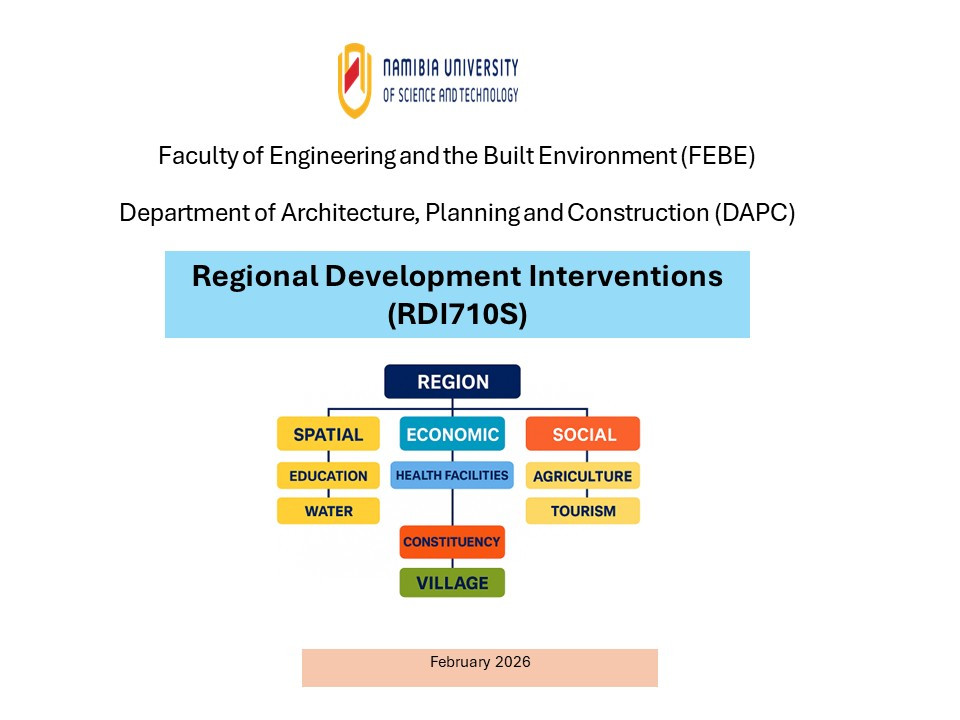
The course aims to equip students with knowledge and skills relevant to area-based spatial development interventions. Students will be able to identify the strengths and shortcomings of current spatial regional development interventions within the existing legal and socio-economic framework.
On completion of this course, students will, through assessment activities, show evidence of their ability to:
1. Demonstrate an understanding of regional spatial development interventions at all levels.
2. Conduct regional spatial analysis through collecting, analysing, and critically evaluating information for informed and appropriate interventions.
3. Evaluate the strengths and shortcomings of different regional development interventions.
4. Design targeted regional development interventions using critical and creative thinking.
- Lecturer: Dr Laudika Kandjinga
Welcome to the 5th semester of the Bachelor of Engineering course Reinforced Concrete & Masonry Design 315 (RCM 710S). This is a compulsory Civil Engineering course that was designed to enable students acquire appropriate competencies to evaluate and design reinforced concrete and masonry structural members that will be done in accordance with the British Standard/Euro and South Africa Bureau of Standard (SABS) codes of practice
- Lecturer: Prof Victor Kamara

Reinforced concrete is a versatile building material to which the present day’s constructions of buildings, bridges and many other infrastructure projects depend on. The course on Reinforced Concrete Design deals with the structural design of reinforced concrete elements. The content of this course includes the elements design such as beams, slabs, columns, foundation, retaining wall, reinforcement detailing and special types of slabs. Here, the word “design” refers to structural design that involves, the sizing of members like columns, slabs, walls, etc., characterization of materials used, provision of number and/or spacing of reinforcing rods at different salient cross sections, based on strength of the members required and the serviceability limits that the members should pass. The recognized code books at the places of design works govern the design philosophy and procedures to be adopted.
The fundamental objective of the course is to comprehend the design principles based on the philosophy that underpins the code of practice and then to independently perform the design of simple structural elements.
This course forms one of the core courses in the curriculum because a civil engineer needs to work with infrastructural project that involves reinforced concrete structural components and need to know about the cause and effect of loads on a structure or structural component, based on which should ascertain whether the member designed can safely withstand the load applied and be serviceable for the intended period.
- Lecturer: Chandrasekar Muthukameswaran

This course forms the core of medical research. The course aims to expose the student to the process of scientific writing, both quantitative and qualitative. This will be achieved by building an understanding of the elements of the research process, equipping the students with developing a research problem as well as appraising relevant literature and data collection and interpretation. The overall outcome is to produce and present a comprehensive research proposal.
- Lecturer: Prof Andrit Lourens
The aim of the course is to enable students to apply the tools, methods, techniques, as required in the research process, covering quantitative, qualitative, and mixed methods approaches, as well as to produce and present a comprehensive research proposal.
- Lecturer: Kirby Claasen
- Lecturer: Prof Johannes Coetzee
- Lecturer: Macdonald Handura
- Lecturer: Dr Kennedy Mabuku
- Lecturer: Beatrice Mutonga
- Lecturer: Dr Stefan Schulz
- Lecturer: Ute Sinkala
- Lecturer: Gail Van Wyk
This course aims to expose students to research paradigms and approaches related to new technological developments and emerging trends in the field of Data Science. It seeks to instill a critical analysis of innovative products and research contributions in the field in order to formulate research questions, plan to execute a scientific or technical research project, focusing on applied research Data Science areas of her/his own interest. Through discussions during the seminar series, it will sharpen students’ conceptual, design, writing and communication skills to develop and present a comprehensive individual research project proposal in a specific application domain of the field of study.
- Lecturer: Dr. Richard Maliwatu

This course forms the core of medical research. The course aims to expose the student to the process of scientific writing, both quantitative and qualitative. This will be achieved by building an understanding of the elements of the research process, equipping the students with developing a research problem as well as appraising relevant literature and data collection and interpretation. The overall outcome is to produce and present a comprehensive research proposal.
- Lecturer: Prof Edosa Omoregie
- Lecturer: Prof Nikodemus Angula

Scientific writing, is an indispensable aspect of studentship (term paper and thesis writing) and scholarship (journal papers and all forms of scientific written communication). It is, therefore, a key step in the scientific communication process. It cannot be overlooked in undergraduate (honours) courses. This is designed to help students improve their abilities to effectively communicate research processes (from conceptualisation up to findings, and conclusion). In order to increase the emphasis on effective writing, this course gives succinct step-by-Step guide to scientific writing by breaking down the scientific writing process into easily digestible pieces to enable students become knowledgeable in writing their academic thesis. Academic thesis aside, the course exposes students to the scientific writing process, and insight into research paper writing as a core activity in the careers of land surveying and land administration experts in the industry and research institutions.
- Lecturer: Prof Eugene Chigbu
This course aims to provide students with appropriate and effective structures for software engineering practices and processes. This will help students to analyse and specify software requirements; look at different "contexts" of technology development or adoption strategies, deployment, and maintenance of software components and systems at the individual, team, and organizational levels.
- Lecturer: Maria Kauhondamwa
- Lecturer: Rosetha Kays
- Lecturer: RACHEL LAZARUS
- Lecturer: Josephina Muntuumo
COURSE AIM:
The course aims to link theory with practice and introduce students to a rich knowledge and skills while analysing administrative practices that promote socially acceptable leadership and management practices in TVET.
- Lecturer: Brenda Kahuikee
- Lecturer: Benhardt Kauteza
- Lecturer: Abraham Shilomboleni
- Lecturer: Justus Tjituka
This course is designed to enable students to demonstrate deepened knowledge of the fundamentals of both theoretical frameworks and practical applications of strategic management in the hospitality and tourism industries. The three phases of the strategic management process - the planning, implementation and evaluation of strategies - will be focussed in this course, and the students will have the opportunities to analyse domestic and international organisations with the strategic tools and techniques learned from the course.
- Lecturer: Prof Simon Chiutsi

Steel is used for structural applications from the same time as the advent of concrete. While timber is a very primitive construction material as we all know. Steel and timber possess the major advantages such as being lightweight materials than concrete, ability to exercise quality of production at the factory conditions and simple work process involved in construction and erection. Steel is widely used in construction of building frame, bridges, tower for telecommunication and electricity transmission, industrial components like, chimney, silo, bunker etc., and water and other liquid storage tanks also. Timber is a primitive structural material, used for building frames, roof supporting structures, small bridges, farm structures, etc. Timber buildings with all the members and components being that of timber are also constructed. Hence, in the civil engineering degree program, design of steel and timber structures is a core course in which the students are trained to perform structural design of steel and timber components subjected to different types of loads and stress resultants. For the steel and timber structural frame, unlike concrete, the joints cannot be highly rigid and monolithic. Hence structural connections are of unique importance to be designed for any steel and timber structural frame. There are standard cross sectional sizes and shapes of steel members used as beams and columns. Likewise, there are standard dimensions, thickness and shapes of steel sheet materials used for roofs, platforms, and floors. Timber members are generally cut to the required/designed shapes mostly rectangular, square, or circular cross sections. Code books stipulate the design procedures to be adopted for the structural design of components and structures.
Course Objective
To introduce and apply basic design principles and characteristics of steel and timber and thus to enable students to perform structural design of steel and timber structural components according to recognized design code.
- Lecturer: Chandrasekar Muthukameswaran
- Lecturer: Dr Onesmus Aloovi
- Lecturer: Dr Karikari Amoa-Gyarteng
- Lecturer: Simeon Amunkete
- Lecturer: Dr Tekla Amutenya
- Lecturer: Prof Omotayo Awofolu
- Lecturer: Prof Maxwell Chufama
- Lecturer: Prof Martin Dandira
- Lecturer: Dr Indepentia De Waldt
- Lecturer: Prof Davy Julian Du Plessis
- Lecturer: Prof. Andrew Jeremiah
- Lecturer: Prof Daniel Kamotho
- Lecturer: Prof Teresia Kaulihowa
- Lecturer: Prof Stewart Kaupa
- Lecturer: Dr Vusumuzi Sibanda
- Lecturer: Dr Nico Sisinyize
- Lecturer: Prof Tafirenyika Sunde
- Lecturer: Dr Gloria Tshoopara
- Lecturer: Dr Zelda van der Walt
- Lecturer: Dr Moses Waiganjo
- Lecturer: MOSES WAIGANJO
- Lecturer: Dr Kwabena Abrokwah-Larbi
- Lecturer: Dr Tekla Amutenya
- Lecturer: Prof Maxwell Chufama
- Lecturer: Dr Gloria Veindira Karita
- Lecturer: Prof Stewart Kaupa
- Lecturer: Dr Wilbert Manyanga
- Lecturer: Dr Helvi Petrus
- Lecturer: Dr Bianca Van Niekerk
The aim of the course is to enable students to design, plan, execute, and process the surveying of accurate control networks using advanced GNSS surveying
- Lecturer: Dr Joseph Odumosu
Enter the course description here ...
- Lecturer: Brenda Kahuikee
- Lecturer: Selma Kambonde
- Lecturer: Ester Kuuvilwa
- Lecturer: Norwin Oosthuizen
- Lecturer: Paulina Shinana
- Lecturer: Selma Iipinge

Thermodynamics (TMD610) is a core course to be completed in the third semester to master the basics of thermodynamics. The course is designed to provide students with an insight understanding of the basics of thermodynamics and the working principles of power plants and refrigeration systems. The course will further focus on the various laws of thermodynamics and the working principles of steam power plants, diesel and petrol engines, gas turbine power plants and refrigeration systems.
- Lecturer: Frans Hanghome
This course will prepare students for advanced research by examining how to plan, conduct and report on empirical investigations with an emphasis on data science within an application domain (e.g., NLP, Finance, Healthcare, Agriculture, and Telecommunications). It will also introduce students to practical but scientific research work, and to encourage independent academic and/or commercial research among students. The overall outcome is to develop novel solutions to data science-related problems and communicate the findings (concepts, designs and techniques) effectively and professionally in accordance with NUST requirements.
Students have to submit three (3) Progress Reports during the year of Thesis, using the link provided.
Due dates are: 17 April, 17 July and 13 November for Report No1, No2 and No3 respectively.
- Lecturer: Dr Munyaradzi Maravanyika
In today’s turbulent business environment, training and development of employees is paramount. Organisations that invest in the growth and development of their employees are likely to reap the benefits than their counterparts. This course is expected to give you a grounding and clearer understanding of how to facilitate a training programme. It equips you with the skills to design a training programme, prepare it, assess your training participants as well as evaluate training. It will provide you with the knowledge on how to become an effective trainer.
- Lecturer: Brenda Kahuikee
- Lecturer: Abraham Shilomboleni
- Lecturer: Odilo Sikopo
The future of business is digital, and 5G technology is driving unprecedented opportunities in emerging markets. Join this Collaborative Online International Learning (COIL) project to explore how 5G is transforming entrepreneurship, enabling new business models, and reshaping industries worldwide.
- Lecturer: EDWARD CHISALA
- Lecturer: Zodidi Gaseb
- Lecturer: Selma Iipinge
- Lecturer: Dr Gabriel Nhinda
- Lecturer: Salmie Sakarias

The aim of this course is to enable students to design, implement and test web-based applications including related software, databases, interfaces, and digital media.
- Lecturer: Eliazer Mbaeva
- Lecturer: Daleen Brand
The aim of the course is to equip students with the skills and knowledge to work in the operational and practical areas of the Hotel. Students should be able to cover the following departments: food and
beverage, food production and rooms division (foundational, practical and reflective competence). WIL I will take place at the NUST Hotel School.
- Lecturer: Hendriena Shiyandja
Work integrated learning provides students with an opportunity to work under the guidance of a mentor within industry in an area related to marketing. Attaching students to industry, provides then with an opportunity to apply and develop their knowledge of marketing theories and concepts in a practical environment which on the other hand, forms students with new knowledge and the ability to link the different concepts into a holistic picture. Thus, you as the student is expected to play an active part and to take a leading role in learning within the controlled environment the targeted company is willing to provide.
- Lecturer: Clemens Kazondovi
- Lecturer: Evans Simataa
WIL aims at giving students the opportunity to evaluate and apply a wide range of theoretical knowledge and skills gained in the study programme of regional and rural development in the work context at an appropriate duty station.
- Lecturer: Pieter Genis

As part of the academic requirements of this department, our students are required to acquire practical experience during the period of study. This provides learners with opportunity to contextualize theoretical knowledge into the workplace. It also provides opportunity to develop interpersonal and communication skills. This exposure provides industry with fresh theoretical eyes that result in creativity and innovation.
The attachment minimum period of 6 weeks or 240 hours is require, full time where possible. If not possible, the arrangement can be a flexible one between the employee and the employer depending on the situation at hand.
- Lecturer: Patemoshela Erkie
- Lecturer: Hendrina Kangala

This course provides students with an opportunity to apply theoretical knowledge and acquire hands-on practical, skills and gain general work experiences of what has been learned in the classroom and develop approaches necessary for the field of journalism and communication technology. Through practical training, application and mentoring, the student gains insight into the profession, as well as experience. This course facilitates an awareness of the students’ strengths and weaknesses in the areas of specialisation: namely, print and Introduction to Broadcast Journalism, public relations and multimedia. As well as work in the mainstream media industry, this course may involve working with the NUST’s Echoes media service, whether in broadcast, online or print components, in order to gain experience in community media. Students can participate in the project and problem-based learning in the community and will write a reflection report on their WIL experience which includes recommendations to the NUST and the organisation. They will also develop and achieve graduate attributes such as problem-solving and critical thinking, teamwork, interpersonal relations and communication that can enhance their employability.
- Lecturer: Jordaania Kondjeni Andima

As part of the academic requirements of this department, our students are required to acquire practical experience during the period of study. This provides learners with opportunity to contextualize theoretical knowledge into the workplace. It also provides opportunity to develop interpersonal and communication skills. This exposure provides industry with fresh theoretical eyes that result in creativity and innovation.
The attachment minimum period of 6 weeks or 240 hours is require, full time where possible. If not possible, the arrangement can be a flexible one between the employee and the employer depending on the situation at hand.
- Lecturer: Patemoshela Erkie
- Lecturer: Hendrina Kangala
- Lecturer: Elina Teodol
- Lecturer: Prof Asa Romeo Asa
- Lecturer: Prof Abdula Kader
- Lecturer: Rebecca Mujazu
- Lecturer: Cephas Pahla