NUST eLearning
Search results: 421
Welcome to the course Occupational Health and Safety 3. Using your previous knowledge of OHS 2A and 2B , you are now required to conduct assessments for all the different types of hazards, investigate causes of accidents and recommend preventative measure, have knowledge and skills on emergency preparedness, first aid as well as electrical, machinery, fire and construction safety and this is what OHS 3 entails! This classroom is not just a place to acquire knowledge; it is a community where respect, collaboration, and creativity thrive. I encourage you to embrace challenges, ask questions, and express your ideas freely. Let's foster an environment where everyone feels valued and supported.
Warm welcome to OHS 3
- Lecturer: Mouyelele Haufiku
Category: S1_2026_PHS
Occupational Health and Safety Management (OH&S) is primarily concerned with protecting the safety, health and welfare of people engaged in work of any kind. The goal is to foster a safe work environment. This course will introduce you to fundamental legislation governing OHS, nationally and internationally.
- Lecturer: Mouyelele Haufiku
Category: S1_2026_PHS
- Lecturer: Dr Rodrigue Gnitchogna Batogna
Category: S1_2026_FCI_CS
- Lecturer: Dr Peter Clement
- Lecturer: Dr Ziska Fields
- Lecturer: Rebecca Mujazu
- Lecturer: Cephas Pahla
Please enter course description here...
- Lecturer: Elaine January-Enkali
- Lecturer: Brenda Kahuikee
- Lecturer: Calista Schwartz
- Lecturer: Matty Shangadi
- Lecturer: Abraham Shilomboleni
Welcome to Pathophysiology (PPH611S)!
In this 16-week course, you will explore how normal physiological processes become disrupted in illness and injury, with a strong focus on understanding why patients deteriorate rather than simply recognizing disease labels. The course builds progressively from cellular and tissue-level injury to inflammation, compensation, shock, metabolic failure, and genetic risk factors, providing a solid foundation for clinical reasoning in emergency care.
Through continuous assessment tasks and weekly learning activities, you will engage with both theoretical concepts and applied clinical scenarios to strengthen your ability to analyze, interpret, and evaluate physiological disturbances. Emphasis is placed on linking underlying pathophysiology to patient presentation, vital sign changes, and patterns of clinical decline commonly encountered in prehospital and emergency settings.
This course aims to equip you with the knowledge and analytical skills needed to interpret complex physiological processes, recognize early signs of deterioration, and apply pathophysiological principles to real-world clinical decision-making. By the end of the course, you should be able to integrate cellular, systemic, metabolic, and compensatory mechanisms to better understand acute illness, injury, and patient outcomes in emergency medical care.
- Lecturer: Oghenekevwe Shalom Akpokiniovo
- Lecturer: Dillon Fredericks
- Lecturer: Elizabeth Ndakukamo
Category: S1_2026_PHS
This course enables students to recognise, interpret, critique, and apply responsibly the techniques of persuasion and propaganda in occupations within fields as diverse as commerce, the media, faith systems, and in times of historical and contemporary warfare. It provides a detailed and comprehensive awareness of how propaganda has permeated political and daily life.
- Lecturer: Thulani Tshabangu
Category: S2_2026_FCHSE_CL
This is a Postgraduate Supervision Portal
- Lecturer: Dr Nega Chere
- Lecturer: Kornelia David
- Lecturer: Prof Adetayo Samuel Eegunjobi
- Lecturer: Dr Andreas Elombo, Ph.D. (Oxon)
- Lecturer: Dr Rodrigue Gnitchogna Batogna
- Lecturer: Dr Ilenikemanya Ndadi
- Lecturer: Prof Serge Neossi
- Lecturer: Prof Sunday A. Reju
- Lecturer: Aina Sakaria
The aim of this course is to teach students the principles of Digital Photogrammetry, enabling them to use a Digital Photogrammetrical Workstation (DPW) to perform basic aerial and close range photogrammetry for the creation of Digital Terrain Models, orthophotos and maps.
The enrollment key is for this course is: dpg710s
- Lecturer: Taruwona Makaza
Category: S1_2026_FEBE_APC
The course is designed to give the student an understanding of the concepts in physical chemistry covering units and behaviour of ideal and non-ideal gases, thermodynamics and thermochemistry, phase and chemical equilibria, reaction rates and mechanism, conductivity of ionic solutions and electrochemical cells. Students should be able to analyse and apply these principles to a wide range of chemical and physical situations.
- Lecturer: Prof Habauka Kwaambwa
Category: S1_2026_BCP
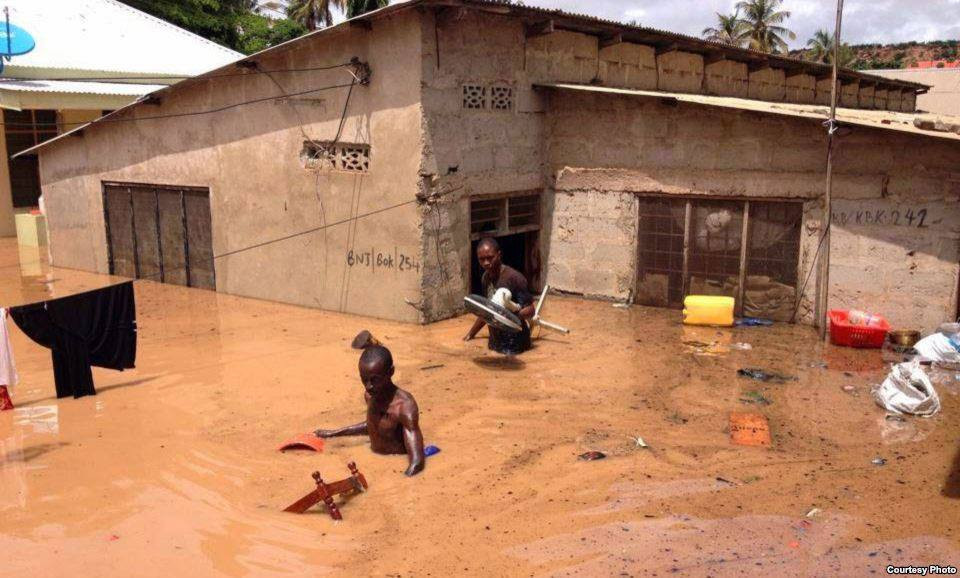 The aim with this Course is to instill in students a mindset, skills and knowledge to understand:
- Concepts, principles, history, current trends in settlements, shelter and integrated living environments
- Role of housing in society
- Statutory policy and planning frameworks and paradigms
- Housing delivery options
- Housing Development management
- Financing and property rights options
- Housing types and densities
- Housing product, norms and standards
- Management and maintenance of housing stock
- Housing needs assessment and post occupancy evaluation
- Consumer education and protection
- Lecturer: Jacques Korrubel
- Lecturer: Geraldine Van Rooi
Category: S1_2026_FEBE_APC

|
Lectuter Dr Edgar Mowa |
Plant protection (PPN 601S) This course aims to provide students with knowledge and basic understanding of weeds, plant pests, diseases and disorders including methods of prevention and control including principles of Integrated Pest Management (IPM), pests control. Examples of current pest problems in different crops will be discussed. This lecture provides students with principles and best practices of crop protection, decision making process based on the ecosystem analysis, and selection of the technology that can be applied in the field. Lectures are divided into three main parts. First part discusses the definition and historical perpectives of plant protection and classification of harmful organisms; the second part deals with methods to recognize the type of pests and plant diseases, methods of observations in the field, and ecosystem analysis as the base for selecting technology; and the last part discusses the principle of Integrated Pest Management, and its implementation in different crops. By the end of this course, each student should be able to,
|
- Lecturer: Dr Edgar Mowa
The aim of the course is to support students in the field of Natural Resources Management to acquire the relevant knowledge of plant taxonomy, plant ecology and forestry to enable them not only, to identify the different important trees, shrubs and grasses but to analyse, evaluate veld conditions and make recommendations to utilize and conserve our natural resources on a sustainable basis.
- Lecturer: Prof Jonathan Kamwi
Category: S1_2026_FHNRAS_BCP
- Lecturer: Dr Charles Eiseb
- Lecturer: Macdonald Handura
- Lecturer: Beatrice Mutonga
- Lecturer: Beath Uuyamba
The course is designed to provide and equip students with a wide range of knowledge on the concepts and norms of democratic policing in Namibia, the SADC and the world. The course equips students with knowledge and understanding of normative prescriptions for what the police can do to promote equitable policing in society to support democratic development. Also, the course intends to instil in students an understanding that democracy requires not only that the police, as part of the executive arm of the state, be constrained by law but also that they may make a special effort to safeguard activities that are essential to the exercise of democratic policing in a multicultural society.
Please enter course description here...
- Lecturer: Eliphas !Owos-Oab
- Lecturer: Lydia Jackie
- Lecturer: Beatrice Mutonga
- Lecturer: Charles Sibolile
- Lecturer: Maria Indongo
- Lecturer: Charles Mbazuvara
- Lecturer: Dr Nico Sisinyize
- Lecturer: Joseph Subasubani
The aim of the course is to prepare students in the field of Criminal Justice to carry out a study and to statistically analyse data in order to make appropriate decisions based on findings. The students will be introduced to research tools, methods, and techniques of scientific communication to disseminate information through reports, seminars and workshops.
- Lecturer: Macdonald Handura
- Lecturer: Beatrice Mutonga
- Lecturer: Ute Sinkala