- Lecturer: Dr Vusumuzi Sibanda
NUST eLearning
Search results: 245
Please enter course description here...
- Lecturer: Brenda Kahuikee
- Lecturer: Selma Kambonde
- Lecturer: Rusten Katjangua
- Lecturer: Norwin Oosthuizen
- Lecturer: Jackson Shikalepo
- Lecturer: Judith Tjituka
- Lecturer: Brenda Kahuikee
- Lecturer: Dr Gloria Tshoopara
Category: S1_2026_FCHSE_ML
This course will introduce students to programming concepts and techniques for solving
computing-related problems. Students will learn to brainstorm a given problem, decompose it
to reduce its complexity, and define the modules that form the solution. They will be exposed
to how to represent data as a compact block of information, define a sequence of instructions
as part of the solution, iterate over a subset of those instructions, or select a portion of them.
- Lecturer: Tendai Mataranyika
- Lecturer: Dr Simon Muchinenyika
Category: S1_2026_FCI_CS

Welcome to the Course. The aim of this course is to introduce the students to the Public Management concepts in general. It also provides insights on the nature and scope of Public Management as well as about various environments within which public management operates. In addition, the course makes the students understand the various functions of a public manager and management and technological aids used in Public Management
- Lecturer: Dr Tekla Amutenya
- Lecturer: Aleks Joseph
- Lecturer: Brenda Kahuikee
- Lecturer: Abraham Shilomboleni

The course is designed to enable students to critically analyse the impact of land administration systems on urban development, housing and spatial planning in contemporary cities.
The major outcome of the course is a series of essays that demonstrate that students are able to think critically around the issues that this course will cover. After completion of the course, students will possess advanced research and analytical abilities and independently evaluate land administration processes in urban development while taking complete responsibility and accountability.
Students are expected to take full responsibility for their own learning.
- Lecturer: Malcon Mazambani
Category: S1_2026_FEBE_LSS

The course is designed to enable students to analyse, from an academic perspective, land administration components and land administration systems to serve society. Students with a Land Administration theoretical background will be able to apply the concepts of land policy instruments regarding access to land, tenure, security, land markets, land reform, land use planning and land taxation. This will enable students to examine institutional, operational and technological requirements for carrying out land administration procedures in a transitional environment when implanting the digital / spatial age systems.
- Lecturer: Menare Royal Mabakeng
Category: S1_2026_FEBE_LSS
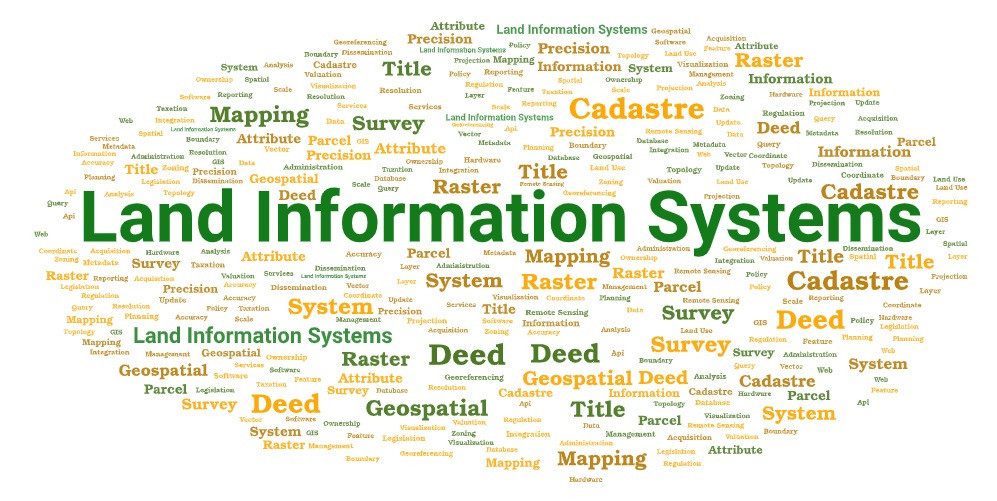
To introduce students to Land Information Systems (LIS) in general and to enable them to create, visualise, and analyse land-based data, including parcel information, zoning, land use, ownership, and general property information. Students will learn how to extract user needs, translate them into information needs and identify data sources before embarking on the collection and design of a land information system.
- Lecturer: Roxanne Murangi
Category: S1_2026_FEBE_MIEE

The course is designed to enable students to evaluate concepts of land policy, its development, implementation and role in development. Students will be introduced to drivers of land policy such as specific class interests, food security, access to water and other natural resources to enable them to critically analyze the impact of land policies on social, economic and political developments. The major outcome of the course is a series of essays that demonstrate that students are able to think critically. After completion of the course, students will possess advanced research abilities, be able to select research methods and independently evaluate processes while taking complete responsibility and accountability. Students are expected to take full responsibility for their own learning.
- Lecturer: Menare Royal Mabakeng
Category: S1_2026_FEBE_LSS
This course is intended to provide students with a basic knowledge of law and the general principles of Administrative law under the Supreme Constitution. Students are expected to understand the Namibian Constitution, how it affects ordinary legislation and apply their knowledge to quasi-realistic hypothetical cases.
- Lecturer: Mariette Hanekom
- Lecturer: Beatrice Mutonga
- Lecturer: Emmy Wabomba
Category: S1_2026_FCHSE_SS
- Lecturer: Adri Smith
- Lecturer: Magdaleena Nambala
- Lecturer: Cephas Pahla
- Lecturer: Dr Vusumuzi Sibanda
- Lecturer: Adri Smith
- Lecturer: Brenda Kahuikee
- Lecturer: Benhardt Kauteza
- Lecturer: Ester Kuuvilwa
- Lecturer: Joshua Mario
- Lecturer: Saara Nambinga
- Lecturer: Augustus Stephanus
The Library and Information Skills Training (LIST) course equips students with the information literacy skills that will transform them into lifelong learners, who are able to understand and use information and technology effectively; plan their personal, financial, social, civic and professional lives well; solve problems and make decisions.
Information literacy training will enable students:
To recognise when they need information;
To search for, access, evaluate, acquire, and use relevant information;
To correctly acknowledge (cite) sources of information.
- Lecturer: Stephen Visagie
Category: Administration
The course, Literary Theory, focuses on the interpretation of literature using different approaches. These approaches are called theories of Literature. They are used to interpret literature form various angles depending on the thrust of the theory. You should understand that some of the theories are applicable in various other fields. Literary scholars have simply adapted them for use in the interpretation of literature. So, you do not have to be confused if you have encountered some of the theories in other disciplines.
- Lecturer: Dr Julia Indongo
- Lecturer: Prof Nelson Mlambo
- Lecturer: Johnson Mutirua
- Lecturer: Beatrice Mutonga

This course provides a comprehensive overview of business management and leadership principles and practices.
Students will explore key concepts in organizational behaviour, strategic planning, financial management, marketing, and operations management.
The course also emphasizes developing essential leadership skills, such as communication, decision-making, problem-solving, and team building.
Through a combination of lectures, case studies, group discussions, and practical exercises, students will gain the knowledge and skills necessary to succeed in today's dynamic business environment.
- Lecturer: Verinjaerako Kangotue
Category: S1_2026_FEBE_MIEE

This course provides students with knowledge of the performance management process. Students will enhance their understanding of the relationship between performance management and strategic planning. The course will further provide students with an understanding of the performance appraisal methods, appraisal feedback, conducting Performance interviews, and performance reward systems.
- Lecturer: Brenda Kahuikee
- Lecturer: Joyce Mukubi
- Lecturer: Abraham Shilomboleni

Introduces marketing as a powerful tool to provide value to consumers through innovative products, services, ideas and experiences. Engages in critical discourse of the historical and emerging marketing context through lectures, discussions, critiques and videos. Students will have an opportunity to be trained to acquire the knowledge and develop the mindset needed to become a marketer who provides superior value in the marketplace.
- Lecturer: Lydia Heelu
- Lecturer: Kalsen Neliwa
- Lecturer: Saara Shilongo
This course will prepare students for advanced research by examining how to plan, conduct and report on empirical investigations with an emphasis on data science within an application domain (e.g., NLP, Finance, Healthcare, Agriculture, and Telecommunications). It will also introduce students to practical but scientific research work, and to encourage independent academic and/or commercial research among students. The overall outcome is to develop novel solutions to data science-related problems and communicate the findings (concepts, designs and techniques) effectively and professionally in accordance with NUST requirements.
Students have to submit three (3) Progress Reports during the year of Thesis, using the link provided.
Due dates are: 17 April, 17 July and 13 November for Report No1, No2 and No3 respectively.
- Lecturer: Dr. Richard Maliwatu
- Lecturer: Prof Hippolyte Muyingi
- Lecturer: Stephen Visagie
Category: SCHOOL OF INFORMATICS_S1_2026
This course will prepare students for advanced research by examining how to plan, conduct and report on empirical investigations with an emphasis on data science within an application domain (e.g., NLP, Finance, Healthcare, Agriculture, and Telecommunications). It will also introduce students to practical but scientific research work, and to encourage independent academic and/or commercial research among students. The overall outcome is to develop novel solutions to data science-related problems and communicate the findings (concepts, designs and techniques) effectively and professionally in accordance with NUST requirements.
Students have to submit three (3) Progress Reports during the year of Thesis, using the link provided.
Due dates are: 17 April, 17 July and 13 November for Report No1, No2 and No3 respectively.
- Lecturer: Dr. Richard Maliwatu
Category: Postgraduate Studies_FCI