
This course aims to equip the students with the necessary knowledge and skills to provide care in the community clinic environment at an advanced life support level.
- Lecturer: Carolie Cloete
This course aims to equip the students with the necessary knowledge and skills to provide care in the community clinic environment at an advanced life support level.
This course forms part of the fourth-year curriculum for the Programme of Human Nutrition. This course is based on both theory and practical and aims to provide students with knowledge and skills on how to utilise computer software to solve problems and manage nutritional programmes.

This course forms part of the fourth-year curriculum for the Programme of Human Nutrition. This course is based on both theory and practical and aims to provide students with knowledge and skills on how to utilise computer software to solve problems and manage nutritional programmes.
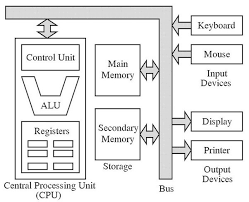
Computer Architecture and Organization aims to develop a deeper understanding of the hardware environment upon which all of computing is based, and how a hardware layer is interfaced to the software layers that comprise the applications that perform modern computing. Students need to understand computer architecture to develop programmes that can achieve high performance through a programmer’s awareness of hardware functional components, their characteristics and limitations. In selecting a system to use, students should be able to understand the trade-offs among various components, such as CPU clock speed, cycles per instruction, memory size, and average memory access time

This course is designed to provide knowledge and skills necessary to computerise manual accounting procedures. Proper record-keeping using any accounting package is essential and enables one to produce financial statements of an organisation.
By the end of this course of study, students should be able to:
This course aims to provide students with knowledge of framed structures.
We shall cover the following types of framed buildings:
- Timber Frames
- Steel Frames
- Concrete Frames

This course aims at providing the students with the understanding of elements and technologies used by carrier networks (ISP) to provide services such as telephony, Internet and television to individuals. The course also addresses the problem of external routing and the implementation of quality of service by resource reservation or by traffic engineering in the networks.

The course is designed to provide students with advanced knowledge and approaches to manage correctional facilities successfully. Special emphasis is directed toward applying concepts to the management of multi-focused institutions that provide for security and rehabilitation programmes. The course further enables students to manage the overall correctional operations, including the facility setting, offenders, and staff. Additionally, students will be able to discuss and examine emerging contemporary issues, such as developing correctional staff as human service professionals, community alternatives to incarceration, privatisation, and other emerging issues.

The course is designed to enable you to effectively manage the full scope of any project to be initiated in the correctional services environment. Emphasis is on developing the student’s proactive planning, organisational, and communication capabilities throughout all project development and implementation stages. The course provides strategies for both managing tasks (i.e., establishing timetables, identifying resources, monitoring progress, implementation and evaluation) and leading people (i.e., establishing accountability, sustaining momentum, communicating effectively). Concepts are integrated through a final project in which students develop a comprehensive plan to implement a correctional initiative that embraces all significant project management principles addressed in this course.
CONTACT HOURS:
As per the programme timetable uploaded on the NUST website
NQF LEVEL AND CREDIT:
Level 6 with 24 credits
COURSE DESCRIPTION:
The course also aims at affording students time to explore different areas of personal development, apply personal development and creative thinking skills that are critical for the working environment and in their personal lives.
PRE-REQUISITES:
New Venture Development in Practice
COURSE EQUIVALENCIES:
None
COURSE DELIVERY METHODS:
The course will be facilitated using a hybrid or blended learning approach incorporating the use of digital technologies such as MyNUST eLearning platform and Microsoft Teams. The course will be facilitated through the following learning activities:
· Lectures in which students are expected to take notes
· Reading assignments
· Participation in class/group discussions
· Individual or group class presentations
· Tutorials
· Take-home assignments and tests
The following communication tools could be used in this course:
My NUST e-learning platform, Email, MS TEAMS Discussion Board, Scheduled Chats, Unscheduled chats, Teleconference calls, Online content, WhatsApp groups, etc.
Course Format:
240 hours
Contact hours: 60 hours, Directed self-learning: 60 hours, Self-Directed Learning: 100, Assessment: 20 hours
EFFECTIVE DATE:
15th February 2024

To equip the students with all necessary theoretical background information and knowledge to be able to prepare good quality cold kitchen items in a professional and commercial environment. This course introduces students to the theoretical constituent elements of advanced food production in the cold kitchen including butchery.
Data management, ethics and security (DME911S) forms part of the Master of Data Science programme. The course is offered in the first semester. The module can be divided into three parts: data management, ethics and security. The course aims to expose students to advanced concepts in handling large and varied datasets including the design, storage, access, protection, governance, and security.

This course aims to provide students with an understanding of the underlying principles as well as the design, implementation and operation of both fixed and wireless networks. The course will also expose students to practical network environments through the configuration and troubleshooting of network topologies using network simulation tools.
This course is designed to expose the student to advanced data structures and algorithms used to solve complex and computationally intensive problems.
The aim of the course is to impart knowledge and skills to enable students to manage a DBMS in order to optimise its use, administer users, create an operational database and properly manage the various structures in an effective and efficient manner including performance monitoring, secure databases as well as plan and implement recovery strategies. The course provides a hands-on administrative approach using current relational DBMSs.

COURSE DESCRIPTION:
This course aims to equip students with Design Thinking concepts and tools for synthesising human-centred techniques to solve problems in a more creative and innovative approach. The course concentrates on evaluating alternative methods to solve problems that might not be instantly evident. Students will be able to integrate the iterative design thinking process of empathising with users of the product or service, defining ideas, producing a prototype and testing.