- Lecturer: Dioné Izaks
- Lecturer: Rebecca Mujazu
- Lecturer: Cephas Pahla
- Lecturer: Dr Thembelani Sithebe
- Lecturer: Prof Karl Van Der Merwe
NUST eLearning
Search results: 245
Enter the course description here ...
- Lecturer: Elizabeth Ndakukamo
- Lecturer: Indaa Paulus
- Lecturer: Brenda Kahuikee
- Lecturer: Dr. Leena Kloppers
- Lecturer: Ester Kuuvilwa
- Lecturer: Dr Godfrey Tubaundule
Category: S1_2026_FCHSE_TVET
- Lecturer: Ndeshihafela Kakwambi
Category: Faculty of Computing and Informatics
- Lecturer: Elina Teodol
Category: S1_2026_FEBE_MIEE
The course aims to provide students with the opportunity to acquire knowledge and discuss theoretical and empirical issues and problems of public finance. To analyse the effects of government policy in particular taxing of economic agents, spending of social resources and financing of government debt with special emphasis on Namibia and the Sub Saharan African. Such knowledge enhance the students with competence in the areas of tax and finance in order to cultivate civil servants in tax auditing, inspection and levying and professionals in commerce, finance and tax planning etc. The course also aims to equip students with the knowledge on budgeting, financing and taxation and this gives them the ability to analyse the government’s fiscal policy and therefore professional competency.
- Lecturer: Henrietha Beukes
- Lecturer: Linda Kambonde
- Lecturer: Mally Likukela
- Lecturer: Henrietha Beukes
- Lecturer: Linda Kambonde
- Lecturer: Tangi Nepolo
Category: S1_2026_FCHSE_GMS

This is a course for third year students of our Bachelor of Business Administration and second year students of Bachelor of Business Management programs. The course is expected to cover evaluation of the role and tasks of purchasing and supply in an organization, design of appropriate organizational structures for international and global purchases, evaluation and application of appropriate instruments for managing the purchasing and supply function, planning and evaluation of the scope of a procurement team for capital purchases, application of the principles of negotiation and assessment of purchasing performance.
- Lecturer: Maria Indongo
- Lecturer: Ottilie Kangandjo
- Lecturer: Charles Mbazuvara
Enter the course description here ...
- Lecturer: Christian John
The goal of the course is to provide students with a fundamental understanding of the quantum chemical description of atoms and molecules. Particular emphasis is placed on the understanding of chemical structure elucidation and bonding together with the theoretical basis for quantum theory. The course provides the first practical experience and the future starting point for solving structural and dynamical problems in chemistry by applying spectroscopic experiments and quantum chemical calculations. Furthermore, the course provides the fundamental quantum chemical background required for further courses in molecular modelling, molecular spectroscopy, inorganic chemistry and physical organic chemistry.
- Lecturer: Prof Habauka Kwaambwa
The goal of the course is to provide students with a fundamental understanding of the quantum chemical description of atoms and molecules. Particular emphasis is placed on the understanding of chemical structure elucidation and bonding together with the theoretical basis for quantum theory. The course provides the first practical experience and the future starting point for solving structural and dynamical problems in chemistry by applying spectroscopic experiments and quantum chemical calculations. Furthermore, the course provides the fundamental quantum chemical background required for further courses in molecular modelling, molecular spectroscopy, inorganic chemistry and physical organic chemistry.
- Lecturer: Prof Habauka Kwaambwa
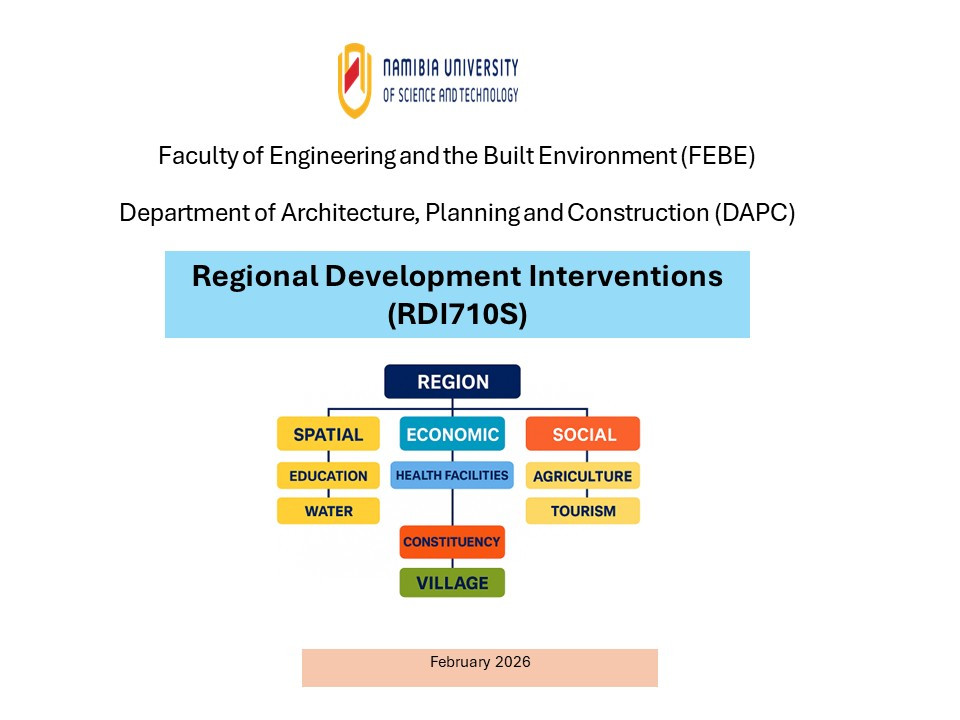
The course aims to equip students with knowledge and skills relevant to area-based spatial development interventions. Students will be able to identify the strengths and shortcomings of current spatial regional development interventions within the existing legal and socio-economic framework.
On completion of this course, students will, through assessment activities, show evidence of their ability to:
1. Demonstrate an understanding of regional spatial development interventions at all levels.
2. Conduct regional spatial analysis through collecting, analysing, and critically evaluating information for informed and appropriate interventions.
3. Evaluate the strengths and shortcomings of different regional development interventions.
4. Design targeted regional development interventions using critical and creative thinking.
- Lecturer: Dr Laudika Kandjinga
Welcome to the 5th semester of the Bachelor of Engineering course Reinforced Concrete & Masonry Design 315 (RCM 710S). This is a compulsory Civil Engineering course that was designed to enable students acquire appropriate competencies to evaluate and design reinforced concrete and masonry structural members that will be done in accordance with the British Standard/Euro and South Africa Bureau of Standard (SABS) codes of practice
- Lecturer: Prof Victor Kamara
Category: S1_2026_FEBE_CMPE

Reinforced concrete is a versatile building material to which the present day’s constructions of buildings, bridges and many other infrastructure projects depend on. The course on Reinforced Concrete Design deals with the structural design of reinforced concrete elements. The content of this course includes the elements design such as beams, slabs, columns, foundation, retaining wall, reinforcement detailing and special types of slabs. Here, the word “design” refers to structural design that involves, the sizing of members like columns, slabs, walls, etc., characterization of materials used, provision of number and/or spacing of reinforcing rods at different salient cross sections, based on strength of the members required and the serviceability limits that the members should pass. The recognized code books at the places of design works govern the design philosophy and procedures to be adopted.
The fundamental objective of the course is to comprehend the design principles based on the philosophy that underpins the code of practice and then to independently perform the design of simple structural elements.
This course forms one of the core courses in the curriculum because a civil engineer needs to work with infrastructural project that involves reinforced concrete structural components and need to know about the cause and effect of loads on a structure or structural component, based on which should ascertain whether the member designed can safely withstand the load applied and be serviceable for the intended period.
- Lecturer: Chandrasekar Muthukameswaran
Category: S1_2026_FEBE_MIEE

This course forms the core of medical research. The course aims to expose the student to the process of scientific writing, both quantitative and qualitative. This will be achieved by building an understanding of the elements of the research process, equipping the students with developing a research problem as well as appraising relevant literature and data collection and interpretation. The overall outcome is to produce and present a comprehensive research proposal.
- Lecturer: Prof Andrit Lourens
The aim of the course is to enable students to apply the tools, methods, techniques, as required in the research process, covering quantitative, qualitative, and mixed methods approaches, as well as to produce and present a comprehensive research proposal.
- Lecturer: Kirby Claasen
- Lecturer: Prof Johannes Coetzee
- Lecturer: Macdonald Handura
- Lecturer: Dr Kennedy Mabuku
- Lecturer: Beatrice Mutonga
- Lecturer: Dr Stefan Schulz
- Lecturer: Ute Sinkala
- Lecturer: Gail Van Wyk
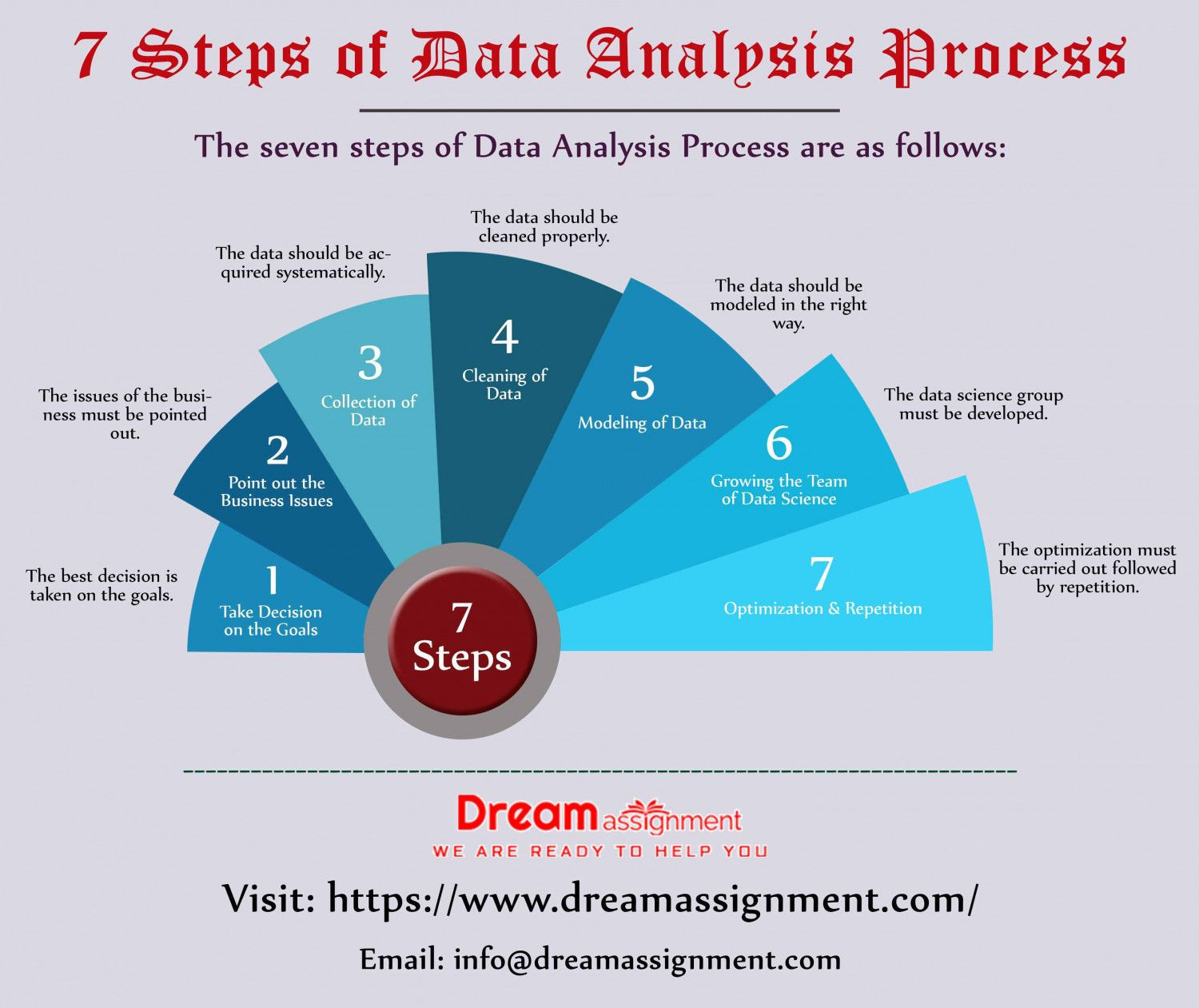
This course aims to expose students to research paradigms and approaches related to new technological developments and emerging trends in the field of Data Science. It seeks to instill a critical analysis of innovative products and research contributions in the field in order to formulate research questions, plan to execute a scientific or technical research project, focusing on applied research Data Science areas of her/his own interest. Through discussions during the seminar series, it will sharpen students’ conceptual, design, writing and communication skills to develop and present a comprehensive individual research project proposal in a specific application domain of the field of study.
- Lecturer: Dr. Richard Maliwatu
Category: S1_2026_FCI_CS

This course forms the core of medical research. The course aims to expose the student to the process of scientific writing, both quantitative and qualitative. This will be achieved by building an understanding of the elements of the research process, equipping the students with developing a research problem as well as appraising relevant literature and data collection and interpretation. The overall outcome is to produce and present a comprehensive research proposal.
- Lecturer: Prof Edosa Omoregie
- Lecturer: Prof Nikodemus Angula
Category: S1_2026_FCHSE_GMS