NUST eLearning
Search results: 272
Welcome to the course Occupational Health and Safety 3. Using your previous knowledge of OHS 2A and 2B , you are now required to conduct assessments for all the different types of hazards, investigate causes of accidents and recommend preventative measure, have knowledge and skills on emergency preparedness, first aid as well as electrical, machinery, fire and construction safety and this is what OHS 3 entails! This classroom is not just a place to acquire knowledge; it is a community where respect, collaboration, and creativity thrive. I encourage you to embrace challenges, ask questions, and express your ideas freely. Let's foster an environment where everyone feels valued and supported.
Warm welcome to OHS 3
- Lecturer: Mouyelele Haufiku
Category: Preventative Health Sciences
Occupational Health and Safety Management (OH&S) is primarily concerned with protecting the safety, health and welfare of people engaged in work of any kind. The goal is to foster a safe work environment. This course will introduce you to fundamental legislation governing OHS, nationally and internationally.
- Lecturer: Mouyelele Haufiku
Category: Preventative Health Sciences
Pharmacology forms part of the second year BPEMC programme. This course aims to equip students with knowledge and understanding of the general concepts of pharmacology in order to enable the student to predict the possible effects of medications on the body. The course provides an overview of common medication classes and basic medications utilised in the hospital setting and emphasis will be placed on the detailed understanding and application of medications under the emergency care practitioners’ scope of practice.
- Lecturer: Simone Veldskoen
Category: S2_2025_FHNRAS_CHS
This is a Postgraduate Supervision Portal
- Lecturer: Dr Nega Chere
- Lecturer: Kornelia David
- Lecturer: Prof Adetayo Samuel Eegunjobi
- Lecturer: Ilenikemanya Ndadi
- Lecturer: Prof Serge Neossi-Nguetchue
- Lecturer: Prof Sunday A. Reju
Category: Natural Resource Sciences
The aim of this course is to teach students the principles of Digital Photogrammetry, enabling them to use a Digital Photogrammetrical Workstation (DPW) to perform basic aerial and close range photogrammetry for the creation of Digital Terrain Models, orthophotos and maps.
The enrollment key is for this course is: dpg710s
- Lecturer: Taruwona Makaza
The course is designed to give the student an understanding of the concepts in physical chemistry covering units and behaviour of ideal and non-ideal gases, thermodynamics and thermochemistry, phase and chemical equilibria, reaction rates and mechanism, conductivity of ionic solutions and electrochemical cells. Students should be able to analyse and apply these principles to a wide range of chemical and physical situations.
- Lecturer: Prof Habauka Kwaambwa
Category: S1_2025_FHNRAS_BCP
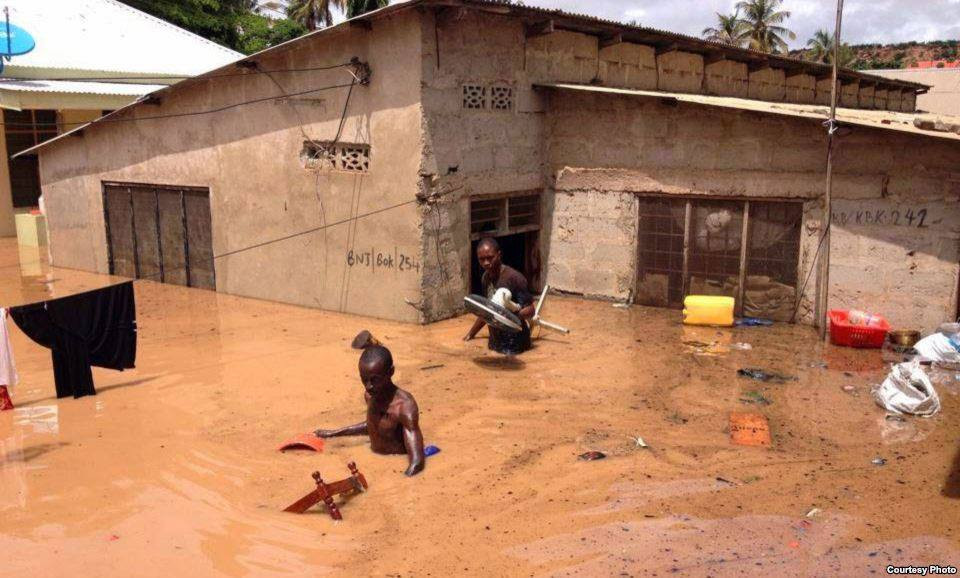 The aim with this Course is to instill in students a mindset, skills and knowledge to understand:
- Concepts, principles, history, current trends in settlements, shelter and integrated living environments
- Role of housing in society
- Statutory policy and planning frameworks and paradigms
- Housing delivery options
- Housing Development management
- Financing and property rights options
- Housing types and densities
- Housing product, norms and standards
- Management and maintenance of housing stock
- Housing needs assessment and post occupancy evaluation
- Consumer education and protection
- Lecturer: Geraldine Van Rooi
Category: Architecture and the Built Environment

|
Lectuter Dr Edgar Mowa |
Plant protection (PPN 601S) This course aims to provide students with knowledge and basic understanding of weeds, plant pests, diseases and disorders including methods of prevention and control including principles of Integrated Pest Management (IPM), pests control. Examples of current pest problems in different crops will be discussed. This lecture provides students with principles and best practices of crop protection, decision making process based on the ecosystem analysis, and selection of the technology that can be applied in the field. Lectures are divided into three main parts. First part discusses the definition and historical perpectives of plant protection and classification of harmful organisms; the second part deals with methods to recognize the type of pests and plant diseases, methods of observations in the field, and ecosystem analysis as the base for selecting technology; and the last part discusses the principle of Integrated Pest Management, and its implementation in different crops. By the end of this course, each student should be able to,
|
- Lecturer: Dr Edgar Mowa
The course is designed to provide and equip students with a wide range of knowledge on the concepts and norms of democratic policing in Namibia, the SADC and the world. The course equips students with knowledge and understanding of normative prescriptions for what the police can do to promote equitable policing in society to support democratic development. Also, the course intends to instil in students an understanding that democracy requires not only that the police, as part of the executive arm of the state, be constrained by law but also that they may make a special effort to safeguard activities that are essential to the exercise of democratic policing in a multicultural society.
Please enter course description here...
- Lecturer: Beatrice Mutonga
- Lecturer: Charles Sibolile
Category: S2_2025_FCHSE_SS
This course aims to equip students with the knowledge of basic primary health care concepts and HIV/AIDS enabling the student to apply these principles in the promotion of primary health care, as well as injury and illness prevention in the community. Students will also be equipped to promote awareness of HIV/AIDS and its prevention.
- Lecturer: Charmaine Conradie
This course focuses on equipping students with the knowledge and skills for application of principles of management in health service delivery and and project management.
- Lecturer: Erick Uukule
- Lecturer: WALIOMUZIBU WALIOMUZIBU MUKISA
This course is for students where a broad introduction to economics is required. It introduces
the student to the operation of the economy as a whole and focuses on areas such as the
national accounts, the major sectors in the economy and macroeconomic problems such as
unemployment, inflation, business cycles and economic growth and development.
- Lecturer: Lavinia Benetta Hofni
- Lecturer: Linda Kambonde
- Lecturer: Faith Marais
- Lecturer: Precious Mwikanda
Category: Accounting Economics & Finance
Personal selling occurs when a company representative interacts directly with a customer or prospective customer to present information about a product or service. It is a process of developing relationships, discovering needs, matching the appropriate products with these needs, and communicating benefits through informing, reminding, or persuading. Preparation for a career in personal selling begins with the development of a personal philosophy or set of beliefs that provides guidance. To some degree, this philosophy is like the rudder that steers a ship. Without a rudder, the ship’s direction is unpredictable. Without a personal philosophy, the salesperson’s behavior also is unpredictable.
- Lecturer: Brenda Kahuikee
- Lecturer: Clemens Kazondovi
- Lecturer: Selma Gwangapi Naanda

In this course, a student will be taken through revision on probability mass function; probability density functions: definition and rules, cumulative distribution functions, mean, median variance, standard deviation and coefficient of variation; Joint probability distribution functions: Marginal probability functions, conditional probability distribution functions and independent random variables; Expectations, Moment generating functions and moments, Cumulant generating functions and cumulants; Characteristic functions; Function of random variables and convolution.
- Lecturer: Dr Dibaba Gemechu
Category: S1_2025_FHNRAS_MSA
This course develops essential communication skills for professional settings, focusing on effective communication styles, intercultural communication, meeting conduct, effective ways of handling conflict, and digital literacy. Students will learn to craft clear emails, reports, and presentations, engage in active listening, and navigate workplace interactions with professionalism and cultural awareness. Emphasis is placed on practical applications to enhance collaboration, leadership, and career success.
- Lecturer: Brenda Kahuikee
- Lecturer: Abraham Shilomboleni
- Lecturer: Dr Cecilia Sibalatani
This course introduces/allows students in good academic standing to pursue practical experience learning in the programme’s major field/areas covered by the regular curriculum.
This course is designed to develop students’ ability and skills to work effectively both in teams and independently on valuation casework allocated to them in a professional manner and by industry standard. This course will prepare the students with a sense of accountability, responsibility, proficiency in time management, attention to details, diligence and hard work, along with good verbal and written communication skills required in order to meet industry standards.
- Lecturer: Verinjaerako Kangotue
Apply the knowledge of construction and valuation in practical situations with emphasis on survey procedures and valuation reports writing in a professional manner and in accordance with industry standard.
- Lecturer: Amin Issa
- Lecturer: Elina Teodol
Apply the knowledge of construction and valuation in practical situations with emphasis on survey procedures and valuation reports writing in a professional manner and in accordance with industry standard.
- Lecturer: Amin Issa
- Lecturer: Dr Thulha Frans
- Lecturer: Dr Emelda Gawas
- Lecturer: Linda Kambonde
- Lecturer: Festus Nafuka