This course forms part of the fourth-year curriculum for the Programme of Human Nutrition. This course is based on both theory and practical and aims to provide students with knowledge and skills on how to utilise computer software to solve problems and manage nutritional programmes.
NUST eLearning
Search results: 94

This course forms part of the fourth-year curriculum for the Programme of Human Nutrition. This course is based on both theory and practical and aims to provide students with knowledge and skills on how to utilise computer software to solve problems and manage nutritional programmes.
- Lecturer: Fiina Namukwambi
- Lecturer: Timea Nghwada
- Lecturer: Dr George Waliomuzibu

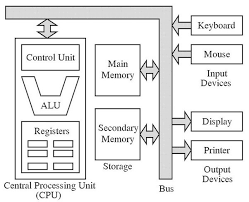
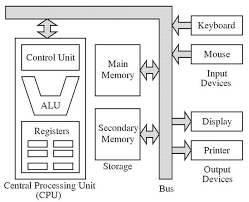
Computer Architecture and Organization aims to develop a deeper understanding of the hardware environment upon which all of computing is based, and how a hardware layer is interfaced to the software layers that comprise the applications that perform modern computing. Students need to understand computer architecture to develop programmes that can achieve high performance through a programmer’s awareness of hardware functional components, their characteristics and limitations. In selecting a system to use, students should be able to understand the trade-offs among various components, such as CPU clock speed, cycles per instruction, memory size, and average memory access time
- Lecturer: ANDREAS AMUKWA
- Lecturer: Andreas Amukwa
- Lecturer: Sepiso Chikuruwo
- Lecturer: ASTERIA JEREMIA
- Lecturer: JOHANNES NATANGWE
- Lecturer: Phius Petrus
- Lecturer: Julius Wariael Silaa
- Lecturer: NADIPITE TANGENI
This course aims to provide students with knowledge of framed structures.
We shall cover the following types of framed buildings:
- Timber Frames
- Steel Frames
- Concrete Frames
- Lecturer: Deharno Kloppers

This course aims at providing the students with the understanding of elements and technologies used by carrier networks (ISP) to provide services such as telephony, Internet and television to individuals. The course also addresses the problem of external routing and the implementation of quality of service by resource reservation or by traffic engineering in the networks.
- Lecturer: Helena Hainana
CONTACT HOURS:
As per the programme timetable uploaded on the NUST website
NQF LEVEL AND CREDIT:
Level 6 with 24 credits
COURSE DESCRIPTION:
The course also aims at affording students time to explore different areas of personal development, apply personal development and creative thinking skills that are critical for the working environment and in their personal lives.
PRE-REQUISITES:
New Venture Development in Practice
COURSE EQUIVALENCIES:
None
COURSE DELIVERY METHODS:
The course will be facilitated using a hybrid or blended learning approach incorporating the use of digital technologies such as MyNUST eLearning platform and Microsoft Teams. The course will be facilitated through the following learning activities:
· Lectures in which students are expected to take notes
· Reading assignments
· Participation in class/group discussions
· Individual or group class presentations
· Tutorials
· Take-home assignments and tests
The following communication tools could be used in this course:
My NUST e-learning platform, Email, MS TEAMS Discussion Board, Scheduled Chats, Unscheduled chats, Teleconference calls, Online content, WhatsApp groups, etc.
Course Format:
240 hours
Contact hours: 60 hours, Directed self-learning: 60 hours, Self-Directed Learning: 100, Assessment: 20 hours
EFFECTIVE DATE:
15th February 2024

- Lecturer: Selma Iipinge
Data management, ethics and security (DME911S) forms part of the Master of Data Science programme. The course is offered in the first semester. The module can be divided into three parts: data management, ethics and security. The course aims to expose students to advanced concepts in handling large and varied datasets including the design, storage, access, protection, governance, and security.
- Lecturer: Dr. Richard Maliwatu

This course aims to provide students with an understanding of the underlying principles as well as the design, implementation and operation of both fixed and wireless networks. The course will also expose students to practical network environments through the configuration and troubleshooting of network topologies using network simulation tools.
- Lecturer: Taleni Andjamba
- Lecturer: Peter Gallert
- Lecturer: Helena Hainana
- Lecturer: Jovita, Nyanyukweni Mateus
- Lecturer: JOSEF RUFUMA
- Lecturer: Josef Rufuma
- Lecturer: Albertina Shilongo
- Lecturer: LINEEKELA SHISHIVENI
- Lecturer: Lineekela Shishiveni
The aim of the course is to impart knowledge and skills to enable students to manage a DBMS in order to optimise its use, administer users, create an operational database and properly manage the various structures in an effective and efficient manner including performance monitoring, secure databases as well as plan and implement recovery strategies. The course provides a hands-on administrative approach using current relational DBMSs.
- Lecturer: Ericky Iipumbu
- Lecturer: Ronald Karon
- Lecturer: Albertina Shilongo
COURSE DESCRIPTION:
This course aims to equip students with Design Thinking concepts and tools for synthesising human-centred techniques to solve problems in a more creative and innovative approach. The course concentrates on evaluating alternative methods to solve problems that might not be instantly evident. Students will be able to integrate the iterative design thinking process of empathising with users of the product or service, defining ideas, producing a prototype and testing.
- Lecturer: Selma Auala
- Lecturer: Imasiku Imasiku
- Lecturer: Rosetha Kays
- Lecturer: Dr Gabriel Nhinda
This course aims to prepare students for the digital economy by empowering them to explore the opportunities that digital entrepreneurship has to offer and harness different online resources to establish digital bases enterprises. Upon successful completion of the course students will, through assessment activities, show evidence of their ability to:
- Evaluate the Digital Economy concept, its impacts, influence, and challenges.
- Develop a digital business strategy.
- Examine platform business models and identify business opportunities they present to entrepreneurs.
- Harness online resources to develop an online-based business.
- Assist Small and Medium-Sized (SMEs) with digital transformation
- Develop online content for digital entrepreneurship.
- Apply digital communication and social networks to create digital business opportunities.
- Lecturer: Moses Shuuya

Disaster and Mass Incident Management is aimed at introducing the concept of mass incidents within the Namibia setting in order to improve emergency management and preparedness.
- Lecturer: Dillon Fredericks
Econometrics is a major part of degree programmes in economics. Indeed, economists, especially those in the areas of macroeconomic modelling and research, amongst others, need reasonable knowledge of this course in order for them to operate in a more efficient manner. Given this background, this course essentially aims at equipping the students with the basics of Econometrics as well as some aspects of Applied Econometrics. The students should be able to build econometric models, estimate econometric models, evaluate econometric models and also forecast macroeconomic variables.
- Lecturer: Henrietha Beukes
- Lecturer: Linda Kambonde
- Lecturer: Eden Shipanga
Dear students
Welcome to Educational Technology
This course aims to provide students with an understanding of the various ways of using online technologies and resources to support teaching, learning, and assessment in campus-based and online course contexts.
- Lecturer: Macdonald Handura
- Lecturer: Beatrice Mutonga
The course, Electrical Machines 214, introduces students to the fundamentals of electrical machines, i.e., the construction, operation and applications of electrical machines.
The course aims at equipping the students with the necessary skills required to carry out the basic analysis of electrical machines and electrical machine systems. The course also provides the necessary theory of electro-mechanical energy conversion principles required to understand the construction, operation and control of electrical machines and machine systems.
- Lecturer: Kalaluka Kanyimba
The course aims to equip students with the cognitive and psychomotor skills of the advanced life support paramedic and enable the student to rapidly, efficiently and safely assess, diagnose and manage the critically ill or injured patient up to the advanced life support scope of practice. The course further aims to prepare students to enter industry and take up supervisory/leadership roles in pre-hospital emergency medical services.
- Lecturer: Dillon Fredericks
This course aims to set a foundation for the entire MSES programme by providing conceptual and practical knowledge on both renewable and non-renewable energy systems for exploitation through appropriate technologies. Starting from a discussion of the importance of energy and the fundamentals of energy sources (renewable and non-renewable), the course explores different types of energy systems, with emphasis on renewable energy in the electricity supply industry, culminating in concepts of demand-side management and energy efficiency.
LEARNING OUTCOMES:
Upon successful completion of the course, students will, through assessment activities, show evidence of their ability to:
· Describe relationships between Energy Systems and the Sustainable Development Goals
· Discuss the fundamental features of energy sources (both renewable and non-renewable) and their associated environmental impacts.
· Describe the Namibian electrical power system and the role of renewable energy technologies in resolving the World Energy Council’s energy trilemma.
· Assessment techniques for renewable energy resources.
· Explain the concepts of power system demand-side management and energy efficiency
- Perform design calculations for selected renewable energy systems.
- Lecturer: Prof James Katende
This course aims at equipping MEAL candidates with high-level knowledge and skills that enable them to develop, implement, and evaluate market-driven ESP programmes in the 21st century Namibian workplace.
- Lecturer: Dr Saara Shipale
- Lecturer: Prof Haileleul Zeleke Woldemariam
The overall aim of the course is to give the students the necessary skills to assess cooperate networks for vulnerabilities and mitigate them before security attacks. The students will secure a medium-sized company network against possible attacks and intrusions, test and configure network security, ensure network devices can operate securely. Further, this course will enable students to report on network security issues and trends, as well as protect networks.
- Lecturer: Prof Mercy Chitauro

Cost and Management Accounting:
The aim of the module is to develop knowledge and understanding of cost and management accounting techniques needed to support management in planning, controlling and monitoring performance in a variety of business context.
The main areas to be covered will include the following:
1. Explain the nature, source and purpose of management information.
2. Explain and analyse data analysis and statistical techniques.
3. Explain and apply cost accounting techniques.
Finance:
Financial Management is concerned with the acquisition and deployment of financial resources to achieve key objectives. The three main areas of financial management are:
1. Acquisition of financial resources
2. Deployment of financial resources
3. The dividend decision
Whether or not to return surplus cash to shareholders (the dividend decision).
- Lecturer: lmmanuel-King Kerii Kenaruzo